



Is Gluten Inflammatory? 7 Benefits of Cutting Wheat From Your Diet

Is gluten inflammatory? For far more people than just coeliacs, yes. In coeliac disease, gluten triggers an immune attack on the gut. And people with gluten or wheat sensitivity (around 1 in 10 people say they react to it) can show signs of gut-lining damage and immune activation too. For everyone else, wheat foods are still some of the biggest blood-sugar spikers and most acid-forming foods in the modern diet. That’s why I recommend cutting gluten out completely, and easing in if you’re new to this.
Could cutting wheat from your diet unlock your health & energy?
For decades we have been told that we should be eating 2-3 serves of whole grains every day. We’ve been told it’s healthy and an integral part of a balanced diet.
But what if it’s not true?
What if, for a lot of us, the wheat we eat three times a day is quietly driving the inflammation, the blood sugar rollercoaster, the bloating and the fatigue we’re trying so hard to fix?
There’s now a solid, growing body of research linking gluten, and the way we eat wheat, to inflammation, gut problems, blood sugar issues, fatigue and even mood – especially for the many people who are sensitive to it without knowing it.
So why have we been continually told to keep on eating it 3 times a day?
Why is it still at the base of the food pyramid?
Why do whole grain products get the tick of approval from health bodies?
For 14 days I challenge you to put all preconceptions about grains aside and try a gluten-free fortnight.
Here are just seven of the benefits you might experience.
First things first: it’s not the lectins
You might have read (and yes, years ago, even here on my own site) that it’s the lectins and phytates in wheat that cause the damage. I don’t believe that any more. When you look at what happens when people actually eat lectin-containing foods, the scary claims just don’t hold up – I’ve gone through all of it in The Truth About Lectins and The Truth About Anti-Nutrients.
The problem with wheat is gluten itself, how fast wheat foods hit your blood sugar, and how MUCH of it most of us eat. That’s what this article is about.
Is gluten inflammatory? More people react than just coeliacs
Coeliac disease is the best-known reaction to gluten. It’s an autoimmune condition: in people who are genetically prone to it, gluten switches on the immune system, which attacks and flattens the tiny finger-like villi that line the small intestine and absorb your nutrients. It affects about 1 in 100 people, and many of them don’t know they have it (NIDDK).
But it’s not only coeliacs. For years, people who felt awful on wheat but tested negative for coeliac disease were told it was all in their heads. The research says otherwise:
- It’s common. A 2026 review of 25 studies and almost 50,000 people found that about 10% of people say they react to gluten or wheat. Bloating was the most common symptom, and about a third reported fatigue (Shiha et al., Gut).
- It’s real. When researchers at Columbia University tested 80 people with wheat sensitivity (no coeliac disease, no wheat allergy), they found raised markers of damage to the cells lining the gut, plus signs of the immune system reacting to gut bacteria that had got through. Those markers moved back towards normal after six months off wheat (Uhde et al., Gut 2016).
- It’s not just the gut. In an Italian survey of 486 people with gluten sensitivity, tiredness, headaches, “foggy mind” and joint and muscle pain were among the most common symptoms (Volta et al., BMC Medicine 2014).
So if you’ve always felt better on the days you skip the bread, there may be a very real reason for it.
The 7 benefits of cutting wheat from your diet
1. Reduced Belly Fat

Here’s one that surprises most people. Wheat bread raises your blood sugar more than a chocolate bar or a soft drink. On the international glycemic index (GI) tables, white wheat bread scores 75 and wholemeal bread 74 – compared with 59 for a soft drink and 40 for chocolate (Atkinson et al., Diabetes Care 2008).
| Food | Glycemic index |
|---|---|
| White wheat bread | 75 |
| Wholemeal bread | 74 |
| Soft drink | 59 |
| Chocolate | 40 |
| Apple | 36 |
Glucose = 100. Values from the international GI tables (Atkinson et al., 2008).
And notice that “wholemeal” barely helps. The ‘whole grain’ label on the packet does very little to protect your blood sugar.
Why? Wheat starch is largely a fast-digesting carbohydrate called amylopectin. In a study from the American Journal of Clinical Nutrition, participants were given a diet high in either amylose or amylopectin, and those on the amylopectin diet had higher glucose and insulin responses after a meal (Behall et al., 1989) – not good.
When there is high blood sugar, insulin is released by the pancreas, and the higher the blood sugar the more insulin must be released.
If you trigger high blood sugars over and over, day after day, that repeated flood of insulin encourages fat to be stored, particularly the visceral fat around your abdomen.
And the bigger your belly (i.e. the more visceral fat), the poorer your response to insulin, and the result is that higher and higher insulin levels are demanded, creating a vicious cycle.
Remember, fat is our biggest source of energy, and high insulin levels make it much harder to burn body fat.
So if bread, pasta, cereal, crackers and baked goods make up a big part of your day, you’re riding that blood sugar rollercoaster several times a day. The spike is followed by the DROP, and that drop is what gives you the sudden fatigue, the need for a nap, and the irresistible hunger… which then leads to a craving for more bread and carbs to spike that blood sugar up again!
That craving isn’t a lack of willpower, either. In a brain-scan study, four hours after a fast-digesting, high-GI meal, people’s blood sugar had dropped lower, they were hungrier, and the reward and craving centre of the brain lit up more than after a slow-digesting meal with the same calories (Lennerz et al., 2013).
And when healthy Danish adults switched to a low-gluten diet for eight weeks in a controlled trial, they had less bloating and lost a modest amount of weight compared with a high-gluten diet. To be fair to the research, the scientists put most of that down to the different fibres people ate in place of wheat, rather than the gluten itself (Hansen et al., Nature Communications 2018). Which, to me, makes the point perfectly: swap the wheat for vegetables, quinoa, buckwheat and legumes and good things happen.
2. More Energy
In my research and coaching I have found that there are FOUR ways that wheat and gluten drain your energy:
1) Hormonal Fatigue: as we just covered, wheat spikes your blood sugar quickly, leading to a big insulin release. Do that day after day and your body starts to respond less well to insulin… which means that the next time you eat wheat, you need even more insulin, and so it continues. And high insulin makes it harder to access your body’s biggest store of energy – body fat. Then comes the crash.
2) Malnourishment Fatigue: in coeliac disease, the damaged lining of the small intestine can’t absorb nutrients properly, and low iron, B12 and folate are common – all of which leave you exhausted no matter how well you eat. And in gluten sensitivity, tiredness is one of the most common symptoms people report (Volta et al., 2014).
3) Mental Fatigue: when gluten is digested by the enzymes and acid in your stomach, it breaks down into a mix of protein fragments (peptides). Back in 1979, researchers discovered that some of these fragments act on the same receptors as opiate drugs in lab tests, and they named them “exorphins” – short for exogenous morphine-like compounds (Zioudrou et al., Journal of Biological Chemistry). Whether they reach the brain in meaningful amounts in people is still being studied. But the brain fog so many people describe after a wheat-heavy meal is real, and “foggy mind” is one of the most common symptoms in gluten sensitivity. More on gluten and the brain in benefit #6.
4) Acidity Fatigue: you’re on my alkaline diet site, so you knew that pH was going to come up at some point, right?
For those of you who are new to my stuff, here’s a quick intro:
The body HAS to maintain a pH of 7.365 in the blood and other extracellular fluids – if it deviates from this even slightly we die. This is why the body will ALWAYS do EVERYTHING it takes to maintain this pH of 7.365 (the same as it regulates your body temperature – a process known as homeostasis).
A misconception of the alkaline diet is that the aim of the diet is to make this pH more alkaline. It’s not. That would kill you. And that would be counterproductive.
The aim of the alkaline diet is to support the body to maintain this pH level – because the damage to the body is done when it has to constantly compromise everything to keep maintaining this pH (Frassetto et al., 2001).
The body has a limited acid-buffering capacity while maintaining normal function, and the repeated requirement to maintain this pH causes a huge array of knock-on problems – and an alkaline diet can help with these problems, from digestive issues and inflammation to bone weakening (Dawson-Hughes et al., 2009), arthritis and gout (Kanbara et al., 2012) and more serious issues. (Here’s how the alkaline diet really works.)
And fatigue is one of the most common, and rapidly experienced, consequences of an acidic diet. Wheat foods are among the most acid-forming in the modern diet: on my chart, white bread, wholemeal bread and pasta are all Highly Acidic (see my acidic foods list).
On top of this, the excess visceral fat created by the blood sugar/insulin response leads to extra inflammation, and so the body becomes even more compromised in its ability to burn fat, remove wastes and absorb the nutrients it needs to repair.
We all have the energy within us to thrive, but when the diet is predominantly wheat and gluten based, that energy gets used up just keeping you going.
3. More Nutrient Absorption
How would you feel if I told you that you might not be getting the full nourishment from the foods you work so hard to get into your diet?
Yep, that salad you just ate, or the juice you took the time to make, may not be delivering everything it should – and gluten can be the reason.
In coeliac disease, here’s what happens. Gluten is made of two groups of proteins, gliadins and glutenins. Gliadin is very hard for us to break down fully, and in people with coeliac disease, an enzyme in the gut called tissue transglutaminase (tTG) changes the leftover gliadin fragments so that the immune system sees them as a threat. The immune system attacks, makes antibodies against both gliadin and tTG, and the villi (the tiny finger-like projections that absorb your nutrients) get worn down and flattened. Fewer villi means less absorption: iron, calcium, folate, B12, zinc and more (NIDDK).
And again, it’s not only coeliacs. In the Columbia study of people with wheat sensitivity, the blood marker for damage to the gut-lining cells (FABP2) was raised too (Uhde et al., 2016).
What about phytates and lectins? Yes, wheat contains both, and you’ll still see them blamed for “blocking” minerals and damaging the gut. The effect of phytates is small and only applies to the meal you’re eating, and the lectin scare doesn’t stand up in human research. I explain both in The Truth About Anti-Nutrients and The Truth About Lectins.
4. Better Digestion
We’ve been sold the fuzzy logic that wheat, and especially whole-wheat or whole-grain foods, are great for our digestive system – because they contain fibre.
The reality is, this is a wolf in lamb’s clothing.
It’s the equivalent of saying blueberry muffins are good for you because the blueberries contain antioxidants.
Or that eating a tub of ice-cream is healthy because it contains calcium.
You can get far more fibre, and far more variety of fibre, from vegetables, legumes, seeds, quinoa and buckwheat – without the gluten.
Wheat and gluten stress the digestive system in three ways:
1: In coeliac disease, the immune reaction to gliadin wears down the villi in the small intestine that are there to absorb nutrients (as above).
2: Gliadin loosens the ‘tight junctions’ that hold the cells of the gut lining together, letting more through than should get through (what people call leaky gut). In a lab study using gut tissue samples, gliadin increased permeability in tissue from everyone tested, including people without coeliac disease, and the biggest effects were in people with active coeliac disease and gluten sensitivity (Hollon et al., Nutrients 2015).
3: Wheat is also high in fermentable carbohydrates (fructans), which can cause gas and bloating in people with a sensitive gut, and gluten has been linked to symptoms in a subgroup of people with IBS (Verdu, American Journal of Gastroenterology 2011).
All health starts in the gut. If you’re struggling with gut issues right now, I challenge you to cut wheat and give up gluten for 14 days and see the difference.
Important: if you have ongoing gut symptoms, tiredness you can’t explain, low iron, or coeliac disease in the family, ask your doctor for a coeliac blood test before you go gluten-free. The test only works while you’re still eating gluten.
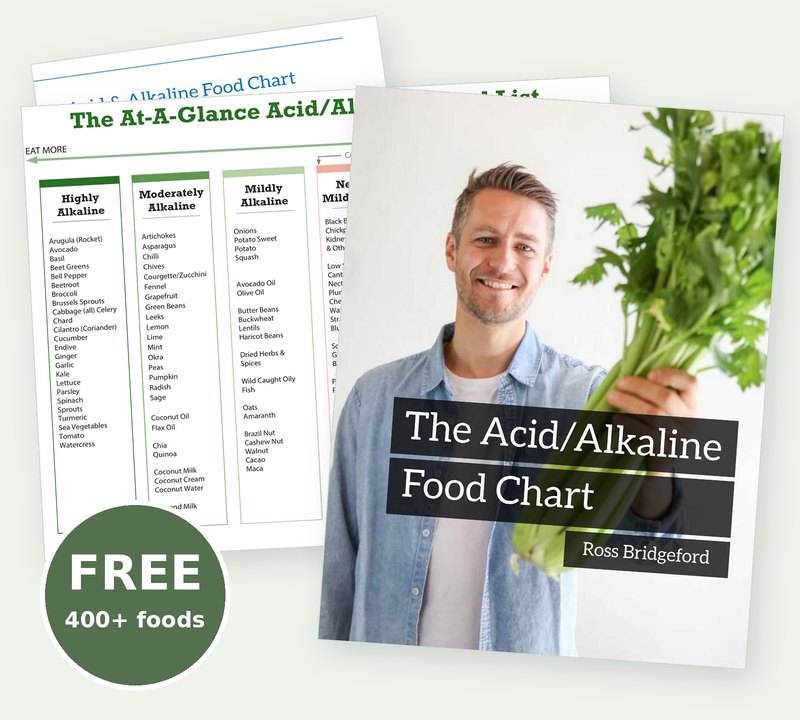
Free download
See what to eat instead of wheat
My free Acid/Alkaline Food Chart rates 400+ foods from Highly Alkaline to Highly Acidic, including every grain and gluten-free swap, with a one-page version for your fridge.
It’s free. Just tell me where to send it.
5. Heart Health
Here’s where that fast-digesting wheat starch rears its ugly head again.
For years we were told that the cholesterol in our food was the big enemy. In 2015 the US Dietary Guidelines Advisory Committee dropped its long-standing limit on dietary cholesterol (DGAC 2015), and attention has moved to other markers.
One that matters is the size of your LDL particles. A study published in the Journal of the American Medical Association showed that people with a pattern of small, dense LDL particles had about three times the risk of heart attack (Austin et al., 1988)!
And guess what pushes your blood fats in that direction? Diets high in refined, fast-digesting carbohydrates like bread, pasta and baked goods.
When you eat more of these carbs than you can burn, your liver turns the excess into triglycerides and packs them into particles called very low-density lipoproteins, or VLDL.
Think of triglycerides in VLDL as the first domino: once there are excess triglycerides as VLDL particles, they interact with other blood particles, especially LDL particles, in turn enriching LDL particles with triglycerides.
This leads to a series of reactions in the bloodstream that cause the formation of small, dense LDL particles.
And when there is insulin resistance (helped along by that repeated blood sugar rollercoaster) the problem is worse (Lamarche et al., 1999).
If you want to look after your heart, you may want to skip past the ‘heart healthy’ and whole-grain claims on loaves of bread and go for real, natural, whole foods instead.
6. Improved Mood (and a Clearer Head)
This is one of the most interesting areas of gluten research right now, and it’s moved on a LOT since I first wrote this article.
Gluten and depression: in a double-blind trial at Monash University, people with gluten sensitivity were given gluten, whey protein or a placebo for three days each, without knowing which. Gluten raised their depression scores compared with placebo, even though their gut symptoms were similar on all three (Peters et al., 2014). A 2018 review of 13 studies (1,139 people) found that a gluten-free diet significantly improved depressive symptoms in people with gluten-related disorders (Busby et al., Nutrients 2018).
Gluten and mental health conditions: about one in three people with schizophrenia have raised antibodies to gliadin, the protein in gluten. In a small double-blind trial, when people in this group were switched to a gluten-free diet for five weeks, their negative symptoms (low motivation, flatness, withdrawal) improved compared with people given hidden gluten (Kelly et al., 2019). It’s early research, and a bigger trial is under way, but it’s a long way from the old idea that this is all in people’s heads. (Please don’t change any treatment without your doctor, of course.)
Gluten and the nervous system: in some people, gluten can affect the brain and nerves directly, causing problems with balance and coordination (known as gluten ataxia) and nerve damage – sometimes with no gut symptoms at all. A gluten-free diet helps in a large share of these cases (Vinagre-Aragón, Hadjivassiliou et al., 2018).
Nutrients for your brain: when the gut is damaged, as in coeliac disease, absorption of the nutrients your brain relies on, such as zinc, B vitamins and iron, suffers. Low zinc has been linked to depression, and in one trial zinc supplements boosted the effect of antidepressants in people who hadn’t been helped by them before (Siwek et al., 2009).
To be fair and complete: a large Harvard study of 13,494 women found no link between how much gluten they ate and their memory and thinking scores, in women without coeliac disease (Wang et al., JAMA Network Open 2021). Which fits everything above – the people who are sensitive to gluten are the ones hit hardest, and around 1 in 10 of us think we might be one of them. Two weeks without it is the simplest way to find out.
7. Reduced Inflammation
Cutting gluten from your diet is one of the fastest ways I’ve seen to reduce inflammation.
If you’re experiencing any niggling health issues, things like fatigue, excess weight, skin conditions, reflux, IBS or more, it’s quite possible that inflammation you don’t even know is happening is playing a part. Research has found links between chronic inflammation and a whole host of conditions and diseases, from skin conditions, allergies and fatigue all the way through to Alzheimer’s, diabetes and heart disease. It’s the reason I put together my anti-inflammation diet.
And gluten is a big part of the picture:
- In coeliac disease, gluten drives an inflammatory immune attack on the gut.
- In wheat sensitivity, eating wheat is linked to measurable immune activation that settles down off wheat (Uhde et al., 2016).
- As far back as 1981, researchers found gluten-induced changes in the gut lining of people without obvious bowel disease (Doherty and Barry, The Lancet).
- And people who eat the most refined grains (white bread, pasta, crackers and the like) have higher levels of an inflammatory protein called PAI-1 (Masters et al., Journal of Nutrition 2010).
On top of the gluten itself, there’s the knock-on effect of:
- the visceral fat that builds up with the repeated blood sugar and insulin spikes, which in itself produces inflammatory signals
- the immune response to the gut irritation and damage
And to make matters worse, two of the other worst foods for inflammation – trans fats and sugar – are very frequently found in the same foods as wheat: the biscuits, cakes, pastries, pizza and processed snacks.
If you want to reduce inflammation in your body, try cutting wheat. It’s as simple as that.
The effects of gluten are far reaching – just cutting wheat from your diet could do you wonders!
As you can probably tell from reading these seven benefits of cutting wheat, the effects all have a knock-on effect on each other, and then further fuel each other. The blood sugar spike causing weight gain, which causes inflammation, which leads to an immune response, which leads to further inflammation and so on is just one example of just one vicious cycle you get into when you eat wheat every day.
Not to mention the energy loss, the bloating, the brain fog, the mood and the acidity.
If you’re serious about getting the energy and health of your dreams, and the body you deserve, I strongly urge you to cut the wheat and give a gluten-free life a try!
How to cut gluten out (and ease in if you’re new)
Ideally, I’d love you to cut gluten out completely. That’s where you’ll feel the biggest difference. But if you’re new to this and bread, pasta and cereal are a big part of your day right now, going cold turkey can feel like a lot. So ease in:
- Week 1: swap your breakfast. Toast and cereal are the easiest wheat to replace. Try one of my alkaline breakfasts instead.
- Week 2: swap your lunch. Sandwiches and wraps become big salads, buckwheat or quinoa bowls, soups and lettuce or nori wraps.
- Week 3: swap your dinner and snacks. Pasta, couscous and rice dishes get the swaps below, and crackers and biscuits make way for veggie sticks, nuts and seeds.
- From then on: gluten-free. Watch for the hidden gluten too: barley, rye and spelt (a type of wheat), regular soy sauce, stock cubes, sauces and gravies, and beer.
| Instead of… | Try… |
|---|---|
| Bread (white or wholemeal) Highly Acidic | Gluten-free sprouted or buckwheat bread, or a big lettuce or nori wrap |
| Pasta Highly Acidic | Zucchini noodles, or a buckwheat or brown rice pasta with as few ingredients as possible |
| Couscous and bulgur | Quinoa (it cooks in about 12 minutes) Moderately Alkaline |
| Rice with your curry or stir-fry | Cauliflower rice – just pulse cauliflower in a food processor and lightly cook it Highly Alkaline |
| Wheat flour in baking | Buckwheat or almond flour (buckwheat isn’t wheat at all) Mildly Alkaline |
| Breakfast cereal or toast | Quinoa or amaranth porridge, chia pots or a green smoothie Mildly Alkaline |
| Soy sauce | Tamari (check the label says gluten-free) |
Ratings from my Acid/Alkaline Food Chart. See every food in my alkaline foods list.
And a note on gluten-free products
While it’s great to cut back on or eliminate gluten from your diet, there are a LOT of gluten-free packaged goods that are just as bad, if not worse.
Don’t be tempted into thinking a muffin or cookie or cake is healthy because it doesn’t contain gluten. If it isn’t healthy WITH gluten, it’s probably not healthy without it either.
See these types of foods as a treat, and try to keep them to a minimum. Being gluten-free isn’t a licence to eat with wild abandon!
And if you’re feeling tired all the time, cutting the wheat is step one of my 5 simple ways to combat fatigue.
Gluten and inflammation FAQ
Is gluten inflammatory?
For a big group of people, yes. In coeliac disease (about 1 in 100 people) gluten sets off an immune attack on the lining of the small intestine. And research now shows that many people with non-coeliac gluten or wheat sensitivity have signs of gut-lining damage and immune activation when they eat wheat, which settle down when they stop. Around 1 in 10 people say they react to gluten or wheat.
Does gluten cause inflammation in everyone?
Not to the same degree. The strongest effects are in people with coeliac disease and gluten sensitivity, and many of them don’t know they have it. In lab tests, gliadin (part of gluten) loosened the gut lining in tissue from people with and without coeliac disease, but the effect was bigger in the sensitive groups. That’s one reason I recommend everyone at least tries two weeks without it.
Is wheat acidic or alkaline?
Wheat is acid-forming. On my chart, white bread, wholemeal bread and pasta are all Highly Acidic. Gluten-free swaps like quinoa (Moderately Alkaline), buckwheat and amaranth (Mildly Alkaline) and cauliflower rice (Highly Alkaline) are much better choices. You can see all the ratings in my alkaline foods list.
What happens when you stop eating gluten?
Most people notice less bloating first, often within a week or two, and many tell me their energy is steadier and the afternoon slump eases. In a Danish trial of 60 healthy adults, a low-gluten diet led to less bloating and a modest weight loss. If you have coeliac disease, the gut lining heals over months, not days.
Should I get tested for coeliac disease before going gluten-free?
Yes, if you have gut symptoms, tiredness you can’t explain, low iron, or coeliac disease in the family. The blood test only works while you’re still eating gluten, so get tested first, then cut it out.
Are the lectins in wheat the problem?
No. I used to think so, but the research doesn’t support blaming lectins, and the same goes for phytates. The problem with wheat is gluten itself and how much of it we eat. I’ve gone through the lectin research in The Truth About Lectins.
Is gluten-free bread healthy?
Not automatically. Plenty of gluten-free breads, cakes and biscuits are just as processed and sugary as the wheat versions. Go for breads with short ingredient lists, and lean on real-food swaps like quinoa, buckwheat, cauliflower rice and big salads.
Are spelt and sourdough gluten-free?
No. Spelt is a type of wheat, and sourdough is still made from wheat or rye flour, so both contain gluten. Barley and rye contain it too. Quinoa, buckwheat, amaranth, millet and rice are naturally gluten-free.
Free download
Start your gluten-free fortnight with my free food chart
400+ foods rated from Highly Alkaline to Highly Acidic, with a one-page version for your fridge, so you always know what to reach for instead of wheat.
It’s free. Just tell me where to send it.
Ross

Ross has taught and coached realistic, sustainable alkaline eating since 2004, working with tens of thousands of people around the world. He’s the author of The Alkaline Reset Cleanse and The Alkaline Life (Hay House). Ross is a health educator, not a doctor or dietitian, so if you have a medical condition, talk to your own health professional before making big changes to your diet.
Scientific Research & References
- Definition & facts for celiac disease, National Institute of Diabetes and Digestive and Kidney Diseases (NIH)
- Shiha et al. (2026), Global prevalence of self-reported non-coeliac gluten and wheat sensitivity: a systematic review and meta-analysis, Gut
- Uhde et al. (2016), Intestinal cell damage and systemic immune activation in individuals reporting sensitivity to wheat in the absence of coeliac disease, Gut
- Volta et al. (2014), An Italian prospective multicenter survey on patients suspected of having non-celiac gluten sensitivity, BMC Medicine
- Hollon et al. (2015), Effect of gliadin on permeability of intestinal biopsy explants from celiac disease patients and patients with non-celiac gluten sensitivity, Nutrients
- Verdu (2011), Can gluten contribute to irritable bowel syndrome?, American Journal of Gastroenterology
- Atkinson, Foster-Powell and Brand-Miller (2008), International tables of glycemic index and glycemic load values: 2008, Diabetes Care
- Behall et al. (1989), Diets containing high amylose vs amylopectin starch: effects on metabolic variables in human subjects, American Journal of Clinical Nutrition
- Lennerz et al. (2013), Effects of dietary glycemic index on brain regions related to reward and craving in men, American Journal of Clinical Nutrition
- Hansen et al. (2018), A low-gluten diet induces changes in the intestinal microbiome of healthy Danish adults, Nature Communications
- Zioudrou, Streaty and Klee (1979), Opioid peptides derived from food proteins: the exorphins, Journal of Biological Chemistry
- Peters et al. (2014), Randomised clinical trial: gluten may cause depression in subjects with non-coeliac gluten sensitivity, Alimentary Pharmacology & Therapeutics
- Busby et al. (2018), Mood disorders and gluten: it’s not all in your mind! A systematic review with meta-analysis, Nutrients
- Kelly et al. (2019), Randomized controlled trial of a gluten-free diet in patients with schizophrenia positive for antigliadin antibodies, Journal of Psychiatry & Neuroscience
- Vinagre-Aragón, Zis, Grunewald and Hadjivassiliou (2018), Movement disorders related to gluten sensitivity: a systematic review, Nutrients
- Wang et al. (2021), Long-term intake of gluten and cognitive function among US women, JAMA Network Open
- Siwek et al. (2009), Zinc supplementation augments efficacy of imipramine in treatment resistant patients, Journal of Affective Disorders
- Austin et al. (1988), Low-density lipoprotein subclass patterns and risk of myocardial infarction, JAMA
- Lamarche, Lemieux and Després (1999), The small, dense LDL phenotype and the risk of coronary heart disease, Diabetes & Metabolism
- Scientific Report of the 2015 Dietary Guidelines Advisory Committee, U.S. Department of Health and Human Services
- Masters et al. (2010), Whole and refined grain intakes are related to inflammatory protein concentrations in human plasma, Journal of Nutrition
- Doherty and Barry (1981), Gluten-induced mucosal changes in subjects without overt small-bowel disease, The Lancet
- Frassetto et al. (2001), Diet, evolution and aging: the pathophysiologic effects of the post-agricultural inversion of the potassium-to-sodium and base-to-chloride ratios in the human diet, European Journal of Nutrition
- Dawson-Hughes et al. (2009), Treatment with potassium bicarbonate lowers calcium excretion and bone resorption in older men and women, Journal of Clinical Endocrinology & Metabolism
- Kanbara et al. (2012), Effect of urine pH changed by dietary intervention on uric acid clearance, Nutrition Journal


Hi Ross
(Inflammatory) cluster headaches too. I’m a chronic sufferer, and am 3 days in, addressing this by being wheat-free, but am in difficult withdrawal, mainly severe lightheadedness. I’ve still had (a small amount of) rye, which seems to trigger the wheat allergy/intolerance, spelt (that appears fine), as do oats, and gluten-free grains. I can feel the dramatic drop in inflammation, weight loss, and I feel much lighter.
Thanks!
Jacquie
When you say, eliminate grains, what type of food are you referring to? Do you include beans?
A very informative article in easy to understand language . I have immensely liked it.
Does reducing wheat help or does the smallest amount of wheat trigger symptoms thank you
This is an excellent article. Thank you. I am 2.5 days into a grain free diet and am noticing significant health benefits. I have tried this before without really noticing much benefit. My aim is to go 7 days and reassess. My question is: For those that love a good pizza or pasta, if I had a pizza on Sunday how approximately many days would it take for me to undo the damage of that one serving? Another way to ask is, can I still stuff my face with pepperoni pizza once a week or is it just not worth it?
What about the green powdered drink..”Just Barley” Is this good for greens?
And what about Sprouted grain breads and tortillas? like Ezekial and Manna breads?
Hi Lynn
Green powdered drinks are great. Sprouted barley grass and wheatgrass contain no gluten. Those breads are good too – sprouted anything is great!
Just look out because some sprouted bread brands add a bunch of additives – go for one that is as natural as possible.
Ross
What about the drugstore fiber made with dextrin. Is that ok?
Hi Ross I have been following your articles for a while ,i live in Barbardos and yes we do have health shop ,I cook brown rice the best uncle ben ,when we are out of stock i have to get it from the u s ,not easy .I use oats not every day .When i go shopping all i see is bread , cakes and i am at lost at what to eat .At lunch i have my Starch Vegetable protein , on morning my fruits .the rest of the day i am at lost what to eat .Please help I am 62 .
Hey Barbara
Keep your eyes out – I’ll be doing a gluten free guide soon to help with this exact issue.
Ross
Hi Ross
I´ve been following you for a while and have to admit that since i’ve been eating more alkaline as you suggest my health and digestive system has iproved quite lot! Thanks for that! 🙂
Nevertheless, I have a confussion about grains… When you mention in different articles about how bad these are for the gut and digestive system, Is not clear for me which grains especifically are you talkig about… I understand wheat in banned, but what about brown rice, broun oat meal, quinoa, amaranth, beans, lentils… etc.
I would really appreciate if you can give me a light with this topic!
Thank you!
Hi Ana
Wheat, barley, rye, spelt etc are out – the foods you mentioned: brown rice, oats, quinoa, amaranth are all good and fine to eat.
Thanks
Ross
HI
I have been a constant reader of your articles on alkaline diet and have been practicing it for some time. . Still i had problem of chronic fatigue and irritable bowl movement. For the last two weeks i have stopped eating all dairy products and all wheat products. Now i am amazed to experience an increased level of energy and and improved mood elevation. Today i read your article on gluten free diet and i would like to share my experience with all your readers.Thank you for your good article.
Thanks 🙂