


What Antioxidants REALLY Do (and the Easiest Ways to Get Enough)

Antioxidants. We hear about them EVERYWHERE: on cereal boxes, juice bottles, supplement labels, even chocolate wrappers. But what do antioxidants actually do? And what’s the easiest way to make sure you’re getting enough?
I first wrote this guide way back in 2009, and a LOT has changed since then, including some of what I believed! The research has moved on, and honestly, the real story is even more interesting than the one we were all told back then. So I’ve rewritten it from top to bottom, with the latest science, the best food sources (with real numbers), and the simple habits that make the biggest difference.
The quick answer: antioxidants protect your cells by neutralising free radicals, unstable molecules your body makes every single day. When free radicals outnumber your antioxidants, you get oxidative stress, which damages cells and is linked with heart disease, cancer, arthritis and more. Here’s the twist: your body’s most powerful antioxidants are the ones it makes itself, like glutathione, and many plant compounds work mostly by switching those defences ON. So the best way to get enough is a wide variety of colourful plants, greens at every meal and a little healthy fat with them, rather than high-dose pills.
Antioxidants: the basics
To understand antioxidants, you first need to meet free radicals. Free radicals are unstable molecules that are missing an electron. To become stable again, they steal an electron from whatever is nearby (your cells’ fats, proteins and DNA), damaging them in the process (Cleveland Clinic).
Antioxidants are the peacekeepers. They donate an electron to the free radical, which stops it stealing one from your healthy cells. Simple as that!
Now, here’s the bit most articles leave out: free radicals aren’t all bad. They’re a normal by-product of turning your food into energy, and at low levels they even help your immune system do its job (Cleveland Clinic). The problem is the balance. When there are too many free radicals and not enough antioxidants to keep them in check, you get oxidative stress.
And oxidative stress matters. It’s linked with heart disease, cancer, Alzheimer’s and Parkinson’s, rheumatoid arthritis, kidney disease, asthma and COPD, and it shows up on the outside too, as sun-damaged skin and wrinkles (Cleveland Clinic).
What tips the balance the wrong way? Smoking, too much sun, excess alcohol, stress, and toxins in the air and water around us (Cleveland Clinic). Most of which, you’ll notice, we have at least some say over.
Antioxidants and the alkaline diet
In The Alkaline Reset Cleanse, I introduce my Triple-A model: eating foods that are alkaline, antioxidant-rich and anti-inflammatory. It’s no coincidence these three go together. The colourful vegetables, greens, herbs, nuts and seeds at the heart of the alkaline diet are the very same foods that are richest in antioxidants. Eat alkaline and you’re already most of the way there.
What antioxidants REALLY do (it’s not what we were told)
Back in 2009, the story was simple: eat antioxidant-rich foods, the antioxidants go into your blood, and they mop up free radicals. More antioxidants = more mopping. Hence the obsession with “antioxidant scores”.
But when researchers actually measured what happens in the body, they found something surprising. Plant flavonoids, the compounds behind a lot of the antioxidant hype, are poorly absorbed, and the levels that reach your blood and cells are 100 to 1,000 times lower than those of your body’s main antioxidants, like vitamin C, uric acid and glutathione. Most of what does circulate has been changed by your gut and liver along the way. So their direct “mopping up” effect is likely very small (Linus Pauling Institute).
Does that mean they don’t work? Not at all! It means they work differently. Plant compounds act as signals. Even at those tiny concentrations, they tweak the signalling pathways in your cells, and that’s where researchers now think much of their anti-inflammatory, protective power comes from (Linus Pauling Institute).
The best example of all is sulforaphane, from broccoli and especially broccoli sprouts. It doesn’t neutralise many free radicals itself. Instead, it switches on a master switch in your cells called Nrf2, which ramps up your body’s own production of glutathione and a whole team of protective enzymes (Linus Pauling Institute). Because your own enzymes keep working long after the sulforaphane has gone, the effect outlasts the food itself. (My sulforaphane guide goes through it all.)
So what do antioxidants really do?
- Some neutralise free radicals directly: vitamin C, vitamin E and the carotenoids (like beta-carotene, lycopene and lutein).
- Some switch on your own defences: sulforaphane and many flavonoids, which help your body make more of its own antioxidants.
- And your body makes the most important ones itself, with glutathione the most abundant of them all.
Which is exactly why the answer is real food, in real variety, every day.
The main antioxidants and the best foods for each
OK, onto the good stuff: where can you get some? Here are the main dietary antioxidants, and the foods richest in each, with real numbers so you know what a serving actually gives you.
Vitamin C: capsicum, kiwi, broccoli and Brussels sprouts
Your body can’t make vitamin C, so you need it every day. Adults need 75 mg a day (women) to 90 mg (men), and smokers need an extra 35 mg on top (NIH Office of Dietary Supplements). Vitamin C also helps keep glutathione topped up, which I’ll come to in a minute.
| Food and serving | Vitamin C | Rating |
|---|---|---|
| Red capsicum (bell pepper), raw ½ cup chopped | 95 mg | Highly Alkaline |
| Kiwifruit 1 medium | 64 mg | Neutral / Mildly Acidic |
| Green capsicum, raw ½ cup chopped | 60 mg | Highly Alkaline |
| Broccoli, cooked ½ cup | 51 mg | Highly Alkaline |
| Strawberries ½ cup sliced | 49 mg | Neutral / Mildly Acidic |
| Brussels sprouts, cooked ½ cup | 48 mg | Highly Alkaline |
| Broccoli, raw ½ cup | 39 mg | Highly Alkaline |
Vitamin C figures from the NIH Office of Dietary Supplements. Ratings from the Acid/Alkaline Food Chart.
See how far ahead red capsicum is? Half a cup gives you a full day’s worth. A capsicum, a kiwi and some broccoli across your day comes to more than 200 mg, well over double what you need, and no pill required. (Fruit is a lovely antioxidant source, by the way. I just keep it to one or two pieces a day because of the sugar, which is why kiwi and strawberries rate the way they do.)
Vitamin E: sunflower seeds, almonds and avocado
Vitamin E is the main fat-soluble antioxidant, protecting the fats in your cell membranes. Adults need 15 mg a day (Linus Pauling Institute), and a small handful of seeds or nuts gets you half of that:
| Food and serving | Vitamin E | Rating |
|---|---|---|
| Sunflower seeds, dry roasted 1 oz (28 g) | 7.4 mg | Mildly Alkaline |
| Almonds 1 oz (28 g) | 7.3 mg | Moderately Alkaline |
| Avocado 1 whole fruit | 4.2 mg | Highly Alkaline |
| Spinach, boiled ½ cup | 1.9 mg | Highly Alkaline |
| Swiss chard, boiled ½ cup chopped | 1.7 mg | Highly Alkaline |
| Broccoli, boiled ½ cup chopped | 1.1 mg | Highly Alkaline |
Vitamin E (alpha-tocopherol) figures from the Linus Pauling Institute. Ratings from the Acid/Alkaline Food Chart.
Beta-carotene: sweet potato, carrots, pumpkin and greens
Beta-carotene is the orange pigment your body can turn into vitamin A. It’s also a carotenoid, which means one very important thing: you absorb far more of it with a little fat and a little cooking (more on that below).
| Food and serving | Beta-carotene | Rating |
|---|---|---|
| Pumpkin, canned 1 cup | 17.0 mg | Moderately Alkaline |
| Spinach, cooked 1 cup | 13.8 mg | Highly Alkaline |
| Sweet potato, baked 1 medium | 13.1 mg | Mildly Alkaline |
| Carrots, cooked 1 cup | 13.0 mg | Highly Alkaline |
| Collard greens, cooked 1 cup | 11.6 mg | Highly Alkaline |
| Carrot, raw 1 medium | 10.1 mg | Highly Alkaline |
| Kale, cooked 1 cup | 2.0 mg | Highly Alkaline |
Beta-carotene figures from the Linus Pauling Institute (pumpkin, spinach and collards are canned or frozen, as tested). Ratings from the Acid/Alkaline Food Chart.
Lycopene foods: tomatoes (cooked!), watermelon and pink grapefruit
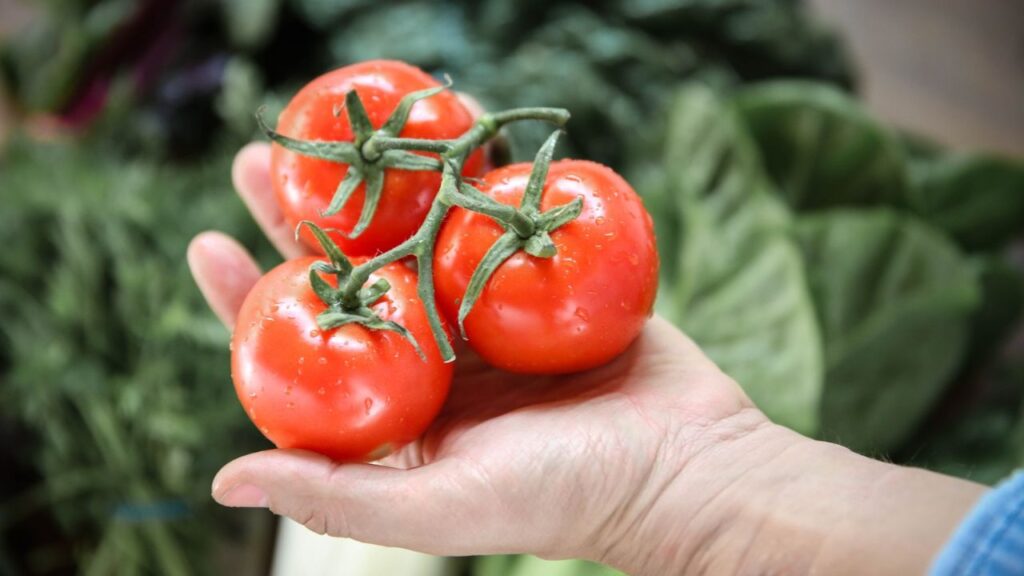
Lycopene is the red pigment in tomatoes, and here’s a great example of where “raw is always best” doesn’t hold. In my 2009 version, I said the jury was still out on cooked tomatoes. Well, the jury’s back! Chopping, puréeing and cooking carotenoid-rich vegetables in oil generally makes their carotenoids MORE available to your body, and heating tomatoes in oil substantially improves how much lycopene you absorb (Linus Pauling Institute). Which is why concentrated tomato products top the list:
| Food and serving | Lycopene | Rating |
|---|---|---|
| Tomato paste 1 cup (about 4.7 mg a tablespoon) | 75.5 mg | Highly Alkaline |
| Tomato purée 1 cup | 54.5 mg | Highly Alkaline |
| Tomato juice 1 cup | 22.0 mg | Moderately Alkaline |
| Watermelon 1 cup | 6.9 mg | Neutral / Mildly Acidic |
| Tomato, raw 1 medium | 3.2 mg | Highly Alkaline |
| Pink or red grapefruit ½ grapefruit | 1.8 mg | Moderately Alkaline |
Lycopene figures from the Linus Pauling Institute; per-tablespoon figure worked out from theirs. Ratings from the Acid/Alkaline Food Chart (tomato paste and purée are rated as tomato; choose ones with no added sugar or salt).
So my advice now? Enjoy raw tomatoes in your salads AND make a habit of cooked tomato dishes with a good drizzle of olive oil: a quick tomato sauce, a slow-cooked stew, or a spoonful of paste stirred into soups and curries.
Lutein foods: spinach, kale and collard greens
Lutein (and its partner zeaxanthin) gathers in your eyes, which is why it’s known as the eye antioxidant. And it’s one more reason to eat your greens, because cooked leafy greens are by far the richest source:
| Food and serving | Lutein + zeaxanthin | Rating |
|---|---|---|
| Spinach, cooked 1 cup | 29.8 mg | Highly Alkaline |
| Collard greens, cooked 1 cup | 18.5 mg | Highly Alkaline |
| Kale, cooked 1 cup | 5.9 mg | Highly Alkaline |
| Pumpkin, cooked 1 cup | 2.5 mg | Moderately Alkaline |
| Brussels sprouts, cooked 1 cup | 2.4 mg | Highly Alkaline |
| Broccoli, cooked 1 cup | 2.0 mg | Highly Alkaline |
| Avocado 1 whole fruit | 0.5 mg | Highly Alkaline |
Lutein figures from the Linus Pauling Institute (spinach, collards, kale, Brussels sprouts and broccoli frozen, then cooked). Ratings from the Acid/Alkaline Food Chart.
Quercetin and the other flavonoids: onions, kale, berries, herbs and more
Flavonoids are the biggest family of plant antioxidants, with thousands of different compounds. The most common in our diets are the flavonols, and quercetin is the best known of those. Here’s where to find each group (Linus Pauling Institute):
| Flavonoid group | Examples | Best food sources |
|---|---|---|
| Flavonols | Quercetin, kaempferol | Onions and spring onions, kale, broccoli, apples, berries, tea |
| Flavones | Apigenin, luteolin | Parsley, thyme, celery, hot peppers |
| Anthocyanins | The red, blue and purple pigments | Berries, red and purple grapes, red cabbage |
| Flavan-3-ols | Catechins, EGCG | Green and white tea, cocoa, apples, grapes, berries |
| Flavanones | Hesperidin, naringenin | Citrus: lemons, limes, oranges, grapefruit |
| Isoflavones | Genistein, daidzein | Soybeans, soy foods and other legumes |
So if you’re looking for quercetin foods, onions (especially red ones), kale and broccoli are your everyday heroes, and they’re all alkaline. Parsley and celery are packed with flavones, and a squeeze of lemon or lime brings the citrus group along for the ride. Red cabbage (the deep purple colour is anthocyanins) is one of the cheapest antioxidant foods going.
Want every food on one page? My free printable chart rates 400+ foods from Highly Alkaline to Highly Acidic, so it’s easy to build your meals around the antioxidant-rich ones. Get the free chart →
Why variety beats any “superfood”
If you take one thing from this guide, make it this: it’s the range of plants you eat that matters, more than piling into any one “superfood”. Even the Cleveland Clinic recommends eating a variety of antioxidant-rich foods rather than relying on a single superfood (Cleveland Clinic).
And a big 2025 study backs this up beautifully. Researchers followed 124,805 people in the UK Biobank and found that those who ate the widest variety of flavonoids had a 6 to 20% lower risk of dying early, and of heart disease, type 2 diabetes, cancer, and respiratory and neurological diseases. Here’s the really interesting part: the amount of flavonoids and the variety each mattered, separately (Parmenter and colleagues, 2025). I wrote about it in the alkaline advantage of flavonoid diversity.
Please note: the study was funded by the Wellcome Trust, but one of the researchers advises, and has received funding from, the US Highbush Blueberry Council, and another consults for a supplement company. It’s also observational, so it shows a link rather than proof.
This is why I’m always banging on about colour! Every colour in your food brings a different family of antioxidants: purple from red cabbage and berries, red from tomatoes and capsicum, orange from carrots and sweet potato, and green from, well, everything green. Aim to get three or four colours on your plate at every meal. It’s also why I’d always rather you add foods than obsess over cutting them out (more on that in the 5 foods I’d add before I tried to cut anything).
Glutathione: how to increase your “master antioxidant”
Glutathione is often called the master antioxidant, and for good reason. It’s the most abundant antioxidant your body makes, in practically every cell, and it helps recycle other antioxidants like vitamins C and E so they can keep working. Your body builds it from three amino acids (cysteine, glycine and glutamate), so it doesn’t rely on you eating it.
Glutathione foods: do they help?
Glutathione IS found in food. When researchers measured it across the American diet, fresh fruits and vegetables had moderate to high amounts (asparagus, avocado and spinach are the ones most often quoted), and frozen foods held on to theirs, but other processing and preserving destroyed most of it (Jones and colleagues, 1992).
But here’s the honest bit. When the same research group compared what 69 people ate with the glutathione in their blood, the glutathione they ate didn’t line up with their blood levels at all (Flagg and colleagues, 1994). Your body breaks down and rebuilds much of it, so eating glutathione isn’t the most reliable way to raise it.
How to increase glutathione naturally
The smarter approach is to help your body make more of its own. These are the steps with the best evidence behind them:
- Eat sulforaphane foods: broccoli, and especially broccoli sprouts. In a small pilot study, seven days of sulforaphane raised glutathione in healthy volunteers’ blood (Sedlak and colleagues, 2018, funded by the US National Institute of Mental Health). Eat your broccoli raw or lightly cooked, and use the 4x broccoli trick to get far more sulforaphane from it.
- Get plenty of vitamin C: in healthy adults, 500 mg of vitamin C a day for two weeks raised red blood cell glutathione by nearly 50% (a higher dose didn’t raise it any further) (Johnston and colleagues, 1993). You won’t get 500 mg from food easily, but a vitamin C-rich day (capsicum, kiwi, broccoli, Brussels sprouts, lemon) gives your body plenty to work with.
- Eat glutathione-rich fresh foods anyway: asparagus, avocado and spinach are brilliant foods for so many reasons, even if the glutathione itself isn’t the main one.
- Take the load off: smoking, excess alcohol and chronic stress all drive up oxidative stress (Cleveland Clinic), which uses up your glutathione faster.
Antioxidant supplements: do they work?
If antioxidant-rich foods are so good for us, surely high-dose antioxidant pills are even better? This is what the big trials set out to test, and the answer was a resounding no. The current evidence doesn’t support antioxidant supplements for preventing cancer, heart disease or cataracts, while diets rich in fruit and vegetables ARE linked with lower risk (NCCIH). Some of the trials even found harm:
High-dose antioxidant pills in large trials
- Beta-carotene: in two large trials, 20 to 30 mg of beta-carotene a day for four to six years raised the risk of lung cancer by 16 to 28% in smokers and former asbestos workers (Linus Pauling Institute). The same nutrient that’s so good for you in carrots and sweet potato!
- Vitamin E: trials haven’t found that vitamin E supplements prevent heart disease, cancer or cataracts. In the large SELECT trial, men taking vitamin E alone had a 17% higher risk of prostate cancer than those on placebo after seven years. High doses can also raise the risk of bleeding, especially if you take blood thinners (Linus Pauling Institute).
- During cancer treatment: antioxidant supplements may interact with some cancer treatments and make them less effective, so if you’re having treatment, check with your team before taking any (NCCIH). (I cover eating well alongside treatment in my guide to the alkaline diet and cancer.)
There is one notable exception: for people who already have intermediate age-related macular degeneration, a specific antioxidant-and-zinc formula (AREDS) reduced the risk of it becoming advanced by about 25% (NCCIH). That’s one to discuss with your eye specialist.
Why do pills disappoint when foods deliver? My take: in food, antioxidants come as a team, hundreds of compounds plus fibre, minerals and everything else, in amounts your body knows what to do with. Isolate one, put a big dose of it in a capsule, and you’ve got something entirely different. Remember, a little oxidative stress is part of how your body signals and defends itself. Flood it, and you can upset the very balance you were trying to protect.
A quick word on ORAC scores
You’ll still see ORAC scores (oxygen radical absorbance capacity) on supplement and “superfood” labels, often with claims like “equal to pounds of fruit”. I used to quote them too. But back in 2012, the USDA withdrew its own ORAC database, saying test-tube antioxidant values don’t tell us what happens in the body, and that ORAC numbers were routinely misused by food and supplement companies to promote their products (Nutraceuticals World, 2012). So take any ORAC claim with a big grain of salt (or better, a big plate of greens).
Ionized water: antioxidants you can drink
Now, you know I’m a big believer in ionized water, and it’s still my favourite way to make alkaline water at home if your budget allows (I compare every method in how to make alkaline water at home). And one of the main reasons is its antioxidant potential.
The antioxidant potential of a liquid is measured as ORP (oxidation reduction potential). Most tap and bottled water has a positive ORP, meaning it’s slightly oxidising. Water from a good ionizer has a negative ORP, meaning it has the capacity to donate electrons, which, if you remember from earlier, is exactly what an antioxidant does. I explain it in full in how to make antioxidant-rich drinking water, and how ionizers do it in how alkaline water ionizers work.
Researchers now believe much of that antioxidant effect comes from the hydrogen gas dissolved in the water as it’s made. And the human research, while still early, is genuinely encouraging:
- Hydrogen-rich water: 38 healthy adults drank 1.5 litres a day of hydrogen-rich water or plain water for four weeks. In those aged 30 and over, their blood’s antioxidant potential rose more with the hydrogen water, and across the group fewer of their immune cells died off and inflammatory signalling was turned down (Sim and colleagues, 2020).
- Ionized (electrolysed reduced) water: 61 healthy adults working at a Korean hospital drank 1.5 litres a day of electrolysed reduced water or mineral water for eight weeks. A key blood marker of oxidative stress fell significantly in the ionized water group compared with the mineral water group (Choi and colleagues, 2020).
Both are small trials, and in both the researchers declared no conflicts of interest. I’ve deliberately left out a couple of recent studies that were run by ionizer manufacturers and their staff. I don’t use research paid for by companies with something to sell, even when it supports what I believe, and that goes for ionizers too.
One practical tip: the hydrogen gradually escapes, so drink your ionized water fresh rather than storing it for days.
How to reduce oxidative stress: 7 easy ways
Back in 2009 I called these “the easiest ways to get enough antioxidants”. They still are, with a few updates. Here’s how to reduce oxidative stress in your everyday life:
My 7 everyday antioxidant habits
- Eat the rainbow, every day. Aim for three or four colours on your plate at each meal. Variety beats any single superfood.
- Greens at every meal. Spinach, kale, chard and collards are loaded with lutein, beta-carotene, vitamin E and alkaline minerals. A daily green juice or smoothie makes it easy.
- Crucifers most days. Broccoli, Brussels sprouts, cabbage, kale and broccoli sprouts switch on your own antioxidant defences through sulforaphane.
- Add a little healthy fat. Carotenoids are absorbed best with fat, and as little as 3 to 5 g may be enough (Linus Pauling Institute). A drizzle of olive oil, some avocado or a sprinkle of seeds does it.
- Cook your tomatoes (sometimes). A tomato sauce with olive oil is one of the best lycopene sources you can eat.
- Take the load off. Don’t smoke, go easy on alcohol, protect your skin in the sun, and find ways to manage stress (Cleveland Clinic).
- Food first, not pills. Get your antioxidants from food, and only take a supplement if your doctor recommends one (NCCIH). And keep well hydrated: ionized water, if you have it.
You don’t have to do all seven, and you never have to be perfect. Start with one or two, and build from there.
Notice how these line up with eating alkaline? Greens, colourful vegetables, herbs, nuts, seeds and healthy fats, and less of the stuff that drives oxidative stress. That’s the Triple-A model in action, and my anti-inflammatory foods guide and alkaline foods list are full of ideas.
My Energise Antioxidant Super Meal
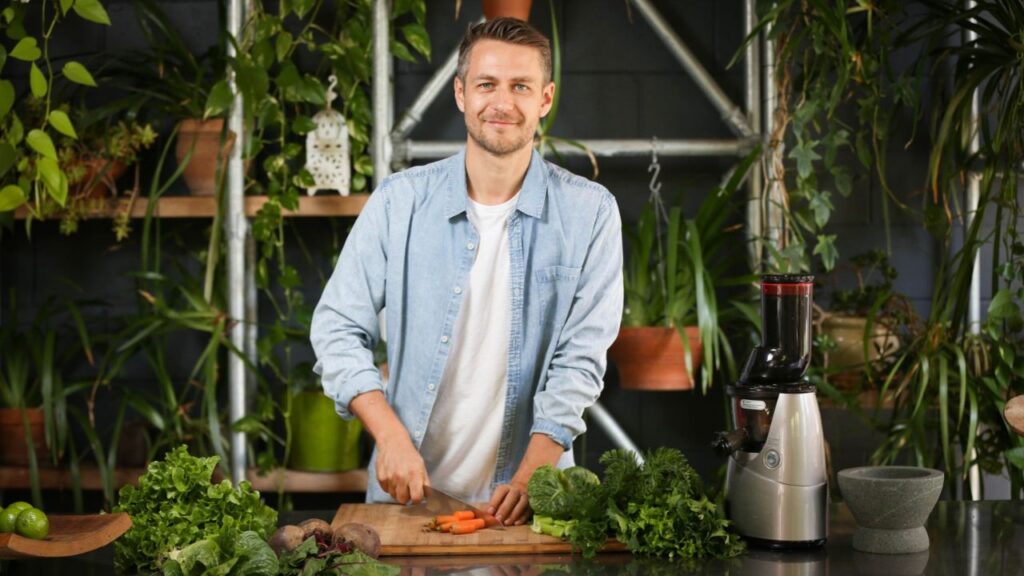
This is the recipe from my original 2009 guide, and it’s still a regular in our house. It’s quick, it’s about 90% raw, and it’s an absolute antioxidant powerhouse: red cabbage for anthocyanins, tomatoes for lycopene, spinach for lutein, carrot for beta-carotene, broccoli for sulforaphane and vitamin C, onions for quercetin, and lime and coriander to bring it all together. I’ve made just one update: a little healthy fat, so you absorb more of those carotenoids.
Serves 2 · Ready in 10 minutes (plus the noodles)
Ingredients
- ¼ red cabbage, finely sliced
- 2 handfuls of baby spinach
- 2 vine-ripened tomatoes, diced
- ½ red onion, finely sliced
- 4 spring onions, sliced
- ½ cucumber, cut into thin sticks
- 1 carrot, grated
- ½ head of broccoli, cut into small florets
- A handful of beansprouts (plus alfalfa or broccoli sprouts, if you have them)
- 1 serve of soba noodles (100% buckwheat soba is gluten-free)
- A handful of fresh coriander, chopped
- Juice of 1 lime
- 1 tablespoon of olive oil or a sprinkle of sesame seeds
- Bragg Liquid Aminos, to taste
Method
- Put the chopped coriander in a large bowl with the lime juice, and let it marinate while you prepare everything else.
- Slice, dice and grate all the vegetables.
- Cook the soba noodles according to the packet, then rinse them under cold water.
- Add the noodles and vegetables to the coriander and lime, drizzle with the olive oil (or sprinkle the sesame seeds), season with Bragg Liquid Aminos and toss it all together. Enjoy!
Why Bragg? It gives that lovely savoury flavour with a lot less of the acid-forming load of regular soy sauce. If you only have soy sauce or tamari, just go easy on it.
What are you waiting for?
Antioxidants aren’t about chasing the highest score or the latest superfood powder. They’re about giving your body what it needs to protect itself, meal after meal: a rainbow of plants, plenty of greens, the right fats, good water, and less of the stuff that drives oxidative stress in the first place. Start with the food chart, pick a couple of the habits above, and make my Super Meal this week!
I hope this makes sense and helps!
Ross
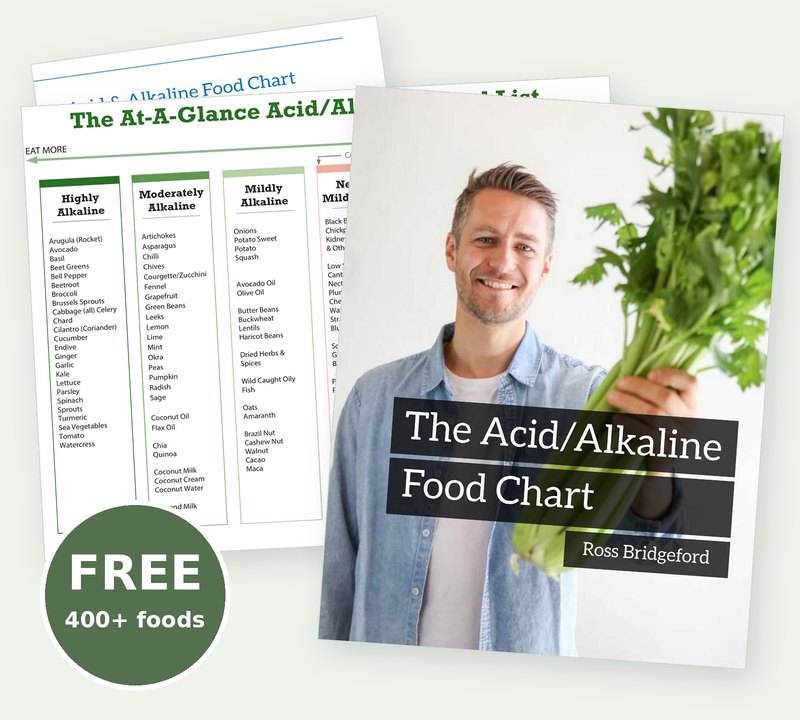
Free download
The full acid/alkaline chart, on one page
My free chart rates 400+ foods from Highly Alkaline to Highly Acidic, with a one-page version for your fridge. It’s the simplest way to fill your plate with antioxidant-rich foods, every day.
Antioxidants FAQ
What do antioxidants do in the body?
Antioxidants protect your cells by neutralising free radicals, unstable molecules that steal electrons from your cells’ fats, proteins and DNA. Some, like vitamins C and E and the carotenoids, neutralise free radicals directly. Others, like sulforaphane and many flavonoids, work mainly by switching on your body’s own antioxidant defences, such as glutathione.
What foods are highest in antioxidants?
Colourful vegetables, leafy greens, herbs, nuts, seeds and fruit. Red capsicum, kiwi and broccoli are top for vitamin C; sunflower seeds, almonds and avocado for vitamin E; cooked spinach, kale and collards for lutein; tomato paste and cooked tomatoes for lycopene; sweet potato, carrots and pumpkin for beta-carotene; and onions, kale, broccoli, berries and parsley for flavonoids like quercetin. Variety matters more than any single food.
How can I reduce oxidative stress naturally?
Eat a wide variety of colourful plants, greens at every meal and cruciferous vegetables most days; add a little healthy fat to help you absorb carotenoids; don’t smoke; go easy on alcohol; protect your skin from the sun; manage stress; and get your antioxidants from food rather than high-dose supplements.
How do I increase glutathione naturally?
Help your body make more of its own. Sulforaphane from broccoli and broccoli sprouts raised blood glutathione in a small human study, and vitamin C helps keep glutathione levels up. Fresh asparagus, avocado and spinach contain glutathione too, although the glutathione you eat doesn’t seem to line up with blood levels. Avoiding smoking and excess alcohol also helps.
Do antioxidant supplements work?
Not for preventing disease. The evidence doesn’t support antioxidant supplements for preventing cancer, heart disease or cataracts, and some trials found harm: high-dose beta-carotene raised lung cancer risk in smokers, and vitamin E alone raised prostate cancer risk in the SELECT trial. The exception is a specific formula (AREDS) for people with intermediate macular degeneration. Food is the way to go.
Are cooked tomatoes better than raw for lycopene?
Yes. Cooking tomatoes, especially with oil, substantially improves how much lycopene your body absorbs, which is why tomato paste and tomato sauce are among the richest sources. Raw tomatoes are still great for you, so enjoy both.
What foods are high in quercetin?
Onions (especially red onions), spring onions, kale, broccoli, apples, berries and tea are the main food sources of quercetin and the other flavonols. Onions, kale and broccoli are also alkaline foods, so they’re an easy daily habit.
Is ionized water an antioxidant?
Water from a good ionizer has a negative ORP (oxidation reduction potential), meaning it can donate electrons, just as antioxidants do. Researchers believe much of this comes from the hydrogen gas dissolved in it. In small, independent human trials, hydrogen-rich water and electrolysed reduced water improved markers of antioxidant status and oxidative stress. Drink it fresh, as the hydrogen gradually escapes.
Why don’t you use ORAC scores any more?
Because the USDA withdrew its ORAC database in 2012, saying test-tube antioxidant values don’t reflect what happens in the body and were routinely misused to promote products. A food’s real value comes from how its compounds work in your body, not from a lab score.
Further reading
- Sulforaphane: benefits, best foods and how to get more
- Broccoli sprouts: the human trials on inflammation
- The alkaline advantage of flavonoid diversity
- The best anti-inflammatory foods
- Alkaline minerals: the best food sources
- How to make antioxidant-rich drinking water
- The alkaline diet: what it is, how it works and an easy plan
- My alkaline diet research library

Ross has taught and coached realistic, sustainable alkaline eating since 2004, working with thousands of clients around the world. He’s the author of The Alkaline Reset Cleanse and The Alkaline Life (Hay House). Ross is a health educator, not a doctor or dietitian, so please talk to your own doctor before starting any supplement, especially if you take medication or are having treatment.
Sources
- Cleveland Clinic: Oxidative stress
- Linus Pauling Institute, Micronutrient Information Center: Flavonoids
- Linus Pauling Institute, Micronutrient Information Center: Carotenoids
- Linus Pauling Institute, Micronutrient Information Center: Vitamin E
- Linus Pauling Institute, Micronutrient Information Center: Isothiocyanates
- NIH Office of Dietary Supplements: Vitamin C fact sheet for health professionals
- National Center for Complementary and Integrative Health (2023). Antioxidant supplements: what you need to know
- Parmenter BH and colleagues (2025). High diversity of dietary flavonoid intake is associated with a lower risk of all-cause mortality and major chronic diseases. Nat Food
- Jones DP and colleagues (1992). Glutathione in foods listed in the National Cancer Institute’s Health Habits and History Food Frequency Questionnaire. Nutr Cancer
- Flagg EW and colleagues (1994). Dietary glutathione intake in humans and the relationship between intake and plasma total glutathione level. Nutr Cancer
- Sedlak TW and colleagues (2018). Sulforaphane augments glutathione and influences brain metabolites in human subjects: a clinical pilot study. Mol Neuropsychiatry
- Johnston CS and colleagues (1993). Vitamin C elevates red blood cell glutathione in healthy adults. Am J Clin Nutr
- Sim M and colleagues (2020). Hydrogen-rich water reduces inflammatory responses and prevents apoptosis of peripheral blood cells in healthy adults: a randomized, double-blind, controlled trial. Sci Rep
- Choi YA and colleagues (2020). Outcomes assessment of sustainable and innovatively simple lifestyle modification at the workplace: drinking electrolyzed-reduced water (OASIS-ERW): a randomized, double-blind, placebo-controlled trial. Antioxidants
- Nutraceuticals World (2012). ORAC database withdrawn

In your ‘The Four Easiest Ways to Antioxidants’ you suggest drinking 304 litres of ionized water every day. Did you mean 3 or 4? Because, let me tell ya, drinking 304 litres of any liquid a day will most definitely end anybody’s hayfever symptoms. And everything else they’ve got going on too.
Doctors are confirming optimum ways to peak performance.
Did you know glutathione is the most powerful, prevalent antioxidant in your body?
However after the age of twenty the production of this essential antioxidant slows down.