


Alkaline Minerals: The Complete Guide (Potassium, Magnesium, Calcium & Sodium)
Alkaline minerals are where the alkaline diet really comes to life for me. Every time someone asks me why leafy greens, avocados, beans and seeds sit at the top of my chart, the answer comes back to the same handful of minerals: potassium, magnesium, calcium and (yes, even) sodium.
Now, I have a confession to make. When I first wrote about alkaline minerals, way back in 2010, the articles here leaned FAR too heavily on the mineral supplements we sold at the time. I don’t sell any of those now, and I’ve learned a huge amount in the years since. So I’ve rewritten this guide from scratch: food first, and backed by the most robust research I could find.
In it I’ll show you what the alkaline minerals are, what each one does in your body, how much you need each day (for the US and here in Australia), and the best alkaline foods for each, with real numbers. And most importantly, how to actually get them every day without overthinking it.
The quick answer: the four main alkaline minerals are potassium, magnesium, calcium and sodium. Your body uses them for hundreds of jobs (your heartbeat, muscles, nerves and bones, to name a few), and they’re part of how it neutralises acids and keeps your blood pH in its tight, safe range. Most of us eat far too much sodium and not nearly enough of the other three. The best sources are leafy greens, beans and lentils, potatoes and sweet potatoes, avocados, nuts and seeds. Most adults need around 2,600 to 3,800 mg of potassium, 310 to 420 mg of magnesium and 1,000 to 1,300 mg of calcium a day, and should keep sodium under 2,000 to 2,300 mg.
What are alkaline minerals?
Alkaline minerals are the minerals that push a food (and your diet as a whole) towards the alkaline-forming side. There are four main ones: potassium, magnesium, calcium and sodium.
The name comes straight from chemistry. On the periodic table, potassium and sodium are “alkali metals” and calcium and magnesium are “alkaline earth metals”, and all four form alkaline compounds. All four are also macrominerals, which means you need them in hundreds or even thousands of milligrams a day. That’s very different from trace minerals like iron and zinc, which you need in just a few milligrams (more on those below).
Alkaline-forming vs acid-forming minerals
On the other side of the ledger sit the acid-forming minerals: phosphorus, sulfur and chloride. Sulfur comes in mostly through the sulfur-containing amino acids in protein, which your body breaks down into acid, and phosphorus is plentiful in meat, cheese, grains and colas. In PRAL, the formula researchers use to estimate a food’s acid load, protein and phosphorus push a food towards acid, while potassium, magnesium and calcium pull it towards alkaline (Remer and Manz, 1995).
| Mineral | Which side | Where it mostly comes from |
|---|---|---|
| Potassium | Alkaline-forming | Leafy greens, beans and lentils, potatoes, avocado |
| Magnesium | Alkaline-forming | Seeds, nuts, beans, leafy greens |
| Calcium | Alkaline-forming | Leafy greens, sesame, calcium-set tofu, sardines, dairy |
| Sodium | Alkaline-forming* | Salt and processed food |
| Phosphorus | Acid-forming | Meat, cheese, grains, colas |
| Sulfur | Acid-forming | Protein, especially meat, eggs and cheese |
| Chloride | Acid-forming | Salt (sodium chloride) |
*Sodium is alkaline-forming on its own, but most of it arrives as salt, where chloride cancels it out. More on that in the sodium section.
Why the mineral’s partner matters
Here’s the bit almost nobody explains, and it’s the key to the whole thing. You never eat potassium or magnesium on its own. In food, minerals always come with a partner, and the partner decides a LOT about the effect:
- In fruit and vegetables, potassium comes with partners like citrate, not chloride (NIH). Your body turns citrate and its cousins into bicarbonate, its own natural alkaline buffer.
- In meat, cheese and grains, the minerals come packaged with lots of protein and phosphorus, so the acid side wins.
- In table salt, sodium is paired one for one with chloride, so salt doesn’t alkalise you at all.
A trial at Tufts University shows this beautifully. 171 adults over 50 took potassium bicarbonate, sodium bicarbonate, potassium chloride or a placebo for three months. Taking bicarbonate (either kind) reduced bone breakdown and the calcium lost in their urine, while potassium on its own, as potassium chloride, made no real difference (Dawson-Hughes and colleagues, 2009). Same mineral, different partner, completely different result.
And that’s exactly why I always say food first. Greens, vegetables, beans and seeds deliver these minerals with the right partners, in the right balance, along with fibre and antioxidants you can’t get from a tub.
Alkaline minerals at a glance
Here’s the whole list on one screen. I go deeper into each one below.
| Mineral | What it does | Daily target for adults | Best alkaline sources |
|---|---|---|---|
| Potassium | Fluid balance, nerves, muscles and heartbeat; lowers blood pressure; the biggest alkalising mineral in your diet | US: 2,600 mg (women), 3,400 mg (men) AU: 2,800 mg (women), 3,800 mg (men) WHO: at least 3,510 mg | Beans and lentils, potatoes, beet greens, spinach, avocado, coconut water |
| Magnesium | Helper for 300+ enzymes: energy, muscles, nerves, blood sugar, bones | 310 to 320 mg (women), 400 to 420 mg (men), in the US and AU | Hemp and pumpkin seeds, black beans, quinoa, nuts, leafy greens |
| Calcium | Bones and teeth (98% is stored there), plus muscles, nerves and blood clotting | 1,000 mg; more for women over 50 and everyone over 70 (1,200 mg US, 1,300 mg AU) | Kale, collards, bok choy, sesame and tahini, chia, calcium-set tofu, sardines |
| Sodium | Fluid balance and nerve signals | US: under 2,300 mg AU: target of 2,000 mg | You’ll get plenty: the job is cutting back on processed food |
Targets from the NIH (US), the NHMRC and healthdirect (Australia) and the WHO. Details and sources in each section.
Why your body needs alkaline minerals
First and foremost, these minerals run your body. Every heartbeat, every muscle contraction and every nerve signal depends on potassium, sodium, calcium and magnesium moving in and out of your cells. Calcium builds your bones and teeth, magnesium helps more than 300 enzymes do their jobs, and potassium and sodium keep your fluids in balance.
But there’s a second job, and it’s the one at the heart of the alkaline diet. Your body HAS to keep your blood at a slightly alkaline pH of around 7.365, within a very tight range. When your diet leans heavily on acid-forming foods, your body calls in its lines of defence to neutralise all that acid: its built-in buffers first, then your lungs and kidneys, and finally the alkaline minerals, like calcium and magnesium, that it borrows from your bones and muscles. Do that meal after meal, day after day, and it’s hugely stressful for your body.
Researchers call the result diet-induced acidosis, and one major review concluded there’s a compelling case that it’s real and has a significant long-term effect on health (Pizzorno and colleagues, 2010).
The core truth
The goal is NOT to make your body “more alkaline”. The goal is to give your body plenty of these minerals, with the right partners, so it can hold your blood pH steady without stress, and without borrowing from your bones. I explain the whole “safe zone” idea in my alkaline diet guide.
What the research says
More alkaline minerals (and less sodium) are linked to
This is the part I find most exciting, because the research on these minerals is some of the most solid in all of nutrition. I’ve stuck to large reviews, big studies and randomised trials here, and I’ve left out studies paid for by supplement companies:
- Blood pressure and stroke: in a review commissioned by the World Health Organization, eating more potassium lowered blood pressure by about 3.5/2 mmHg on average, with the benefit seen in people with high blood pressure (and up to around 7 points on the top number at intakes of about 3,500 to 4,700 mg a day). Across 11 studies following 127,038 people, higher potassium intakes were linked to a 24% lower risk of stroke (Aburto and colleagues, 2013). This review is why the WHO now recommends at least 3,510 mg of potassium a day.
- Sodium vs potassium: in 10,709 adults whose sodium and potassium were measured in at least two 24-hour urine collections, every extra 1,000 mg of sodium a day was linked to an 18% higher risk of cardiovascular disease (heart attacks, strokes and the like), every extra 1,000 mg of potassium to an 18% lower risk, and people with the highest sodium-to-potassium ratio had a 62% higher risk than those with the lowest (Ma and colleagues, 2022, funded by the American Heart Association and the NIH).
- Swapping your salt: in 600 villages in rural China, 20,995 people who’d had a stroke, or were over 60 with high blood pressure, swapped their regular salt for a salt substitute (75% sodium chloride, 25% potassium chloride). Over nearly five years they had 14% fewer strokes, 13% fewer major cardiovascular events and 12% fewer deaths, with no increase in serious problems from high potassium (Neal and colleagues, 2021, funded by Australia’s National Health and Medical Research Council).
- Your bones: in 244 adults over 50, three months of potassium bicarbonate lowered markers of bone turnover (including bone breakdown, at the lower dose) and the amount of calcium lost in urine, compared with a placebo (Dawson-Hughes and colleagues, 2015, funded by the NIH). Add the Tufts trial above, where bicarbonate helped and chloride didn’t, and you can see why the alkaline partner matters. The researchers say longer trials on bone density and fractures are the next step.
- Your kidneys: in 71 people with stage 4 chronic kidney disease, a year of extra fruit and vegetables (enough to halve their dietary acid load) improved their acid levels and lowered urine markers of kidney damage, just like the sodium bicarbonate doctors prescribe, and without pushing their potassium up (Goraya and colleagues, 2013).
- Magnesium: across 40 studies of more than a million people, every extra 100 mg of magnesium a day was linked to a 19% lower risk of type 2 diabetes (Fang and colleagues, 2016). I go through the full research in my magnesium deficiency guide.
A quick word on what these studies can and can’t tell us. Some are population studies, which show a strong link rather than proving cause. But the salt substitute, bone and kidney studies are randomised trials, and they all point the same way: more of these minerals from food, and less sodium, is very good news for your heart, your bones and your kidneys.
Potassium: the most important alkaline mineral
Potassium is the main mineral inside your cells, and it works hand in hand with sodium (the main mineral outside them) to keep your fluids balanced, your nerves firing, your muscles contracting and your heart beating in rhythm. It also helps your kidneys clear sodium, which is a big part of why it lowers blood pressure.
Why potassium matters most for your acid load
If I could only get you to focus on one alkaline mineral, it would be potassium. Using the PRAL formula’s own numbers, a day’s worth of potassium does around five times the alkalising work of a day’s calcium, and about seven times that of magnesium. That’s simply because we eat thousands of milligrams of potassium, and only hundreds of the others:
It’s also why the most alkaline foods on my chart (leafy greens, avocados, potatoes, beans) are all potassium heavyweights. For the full picture, my alkaline foods list rates 195 foods.
How much potassium do you need?
| Who | US (NIH) | Australia (NHMRC) |
|---|---|---|
| Women | 2,600 mg | 2,800 mg |
| Men | 3,400 mg | 3,800 mg |
| Pregnancy | 2,900 mg | 2,800 mg |
These are “Adequate Intakes” (NIH, healthdirect). The World Health Organization goes further and suggests at least 3,510 mg a day for all adults, to lower blood pressure and the risk of heart disease and stroke.
And most of us fall short. In the US, women average 2,320 mg and men 3,016 mg a day from food (NIH), below even the US targets, let alone the WHO’s.
High-potassium vegetables and other alkaline foods
Here are the best sources, with how each one rates on my chart:
| Food, serving and rating | Potassium |
|---|---|
| Lima (butter) beans, cooked 1 cup (188 g) Mildly Alkaline | 955 mg |
| Potato 1 medium, skin on (213 g) Mildly Alkaline | 905 mg |
| Beet greens 100 g raw (about 2½ cups) Highly Alkaline | 762 mg |
| Lentils, cooked 1 cup (198 g) Mildly Alkaline | 731 mg |
| Kidney beans, cooked 1 cup (177 g) Mildly Alkaline | 717 mg |
| White (navy) beans, cooked 1 cup (182 g) Mildly Alkaline | 708 mg |
| Edamame (young soybeans) 1 cup shelled (155 g) Mildly Alkaline | 676 mg |
| Coconut water 1 cup (240 ml) Moderately Alkaline | 600 mg |
| Spinach 100 g raw (about 3 cups) Highly Alkaline | 558 mg |
| Salmon, wild, cooked 85 g (3 oz) Neutral / Mildly Acidic | 534 mg |
| Butternut squash 1 cup cubed (140 g) Mildly Alkaline | 493 mg |
| Avocado ½ avocado (100 g) Highly Alkaline | 485 mg |
| Artichoke 1 medium (128 g) Moderately Alkaline | 474 mg |
| Sweet potato 1 medium (130 g) Mildly Alkaline | 438 mg |
| Swiss chard 100 g raw (about 3 cups) Highly Alkaline | 379 mg |
| Fennel 1 cup sliced (87 g) Moderately Alkaline | 360 mg |
| Tomato 1 medium (123 g) Highly Alkaline | 292 mg |
Mineral figures calculated from USDA FoodData Central (SR Legacy) values per 100 g, raw unless it says cooked. Ratings are from my Acid/Alkaline Food Chart.
Potassium per serving, USDA FoodData Central
Bananas get all the potassium glory, but they’re Moderately Acidic because of their sugar (here’s why), and plenty of alkaline foods beat them. Half an avocado, a medium potato or a cup of beans all give you more.
Easy ways to get more potassium:
- Get a cup of beans or lentils into at least one meal a day (soups, salads, curries, a bean mash instead of bread).
- Keep potatoes and sweet potatoes on the menu: baked, skin on, not fried.
- Have half an avocado most days.
- Throw a big handful of spinach or beet greens into your smoothie.
- Reach for coconut water after a sweaty workout.
- Cook from scratch as often as you can: the less processed food you eat, the better your potassium-to-sodium balance gets.
Who needs to be careful with potassium
If you have kidney disease, or take medicines that make your kidneys hold on to potassium (ACE inhibitors, ARBs, or potassium-sparing diuretics like spironolactone or amiloride), even normal intakes can push your potassium too high. The same goes for some people with type 1 diabetes, heart failure, adrenal insufficiency or liver disease (NIH). If that’s you, please talk to your doctor before boosting your potassium, using a potassium salt substitute or taking a supplement.
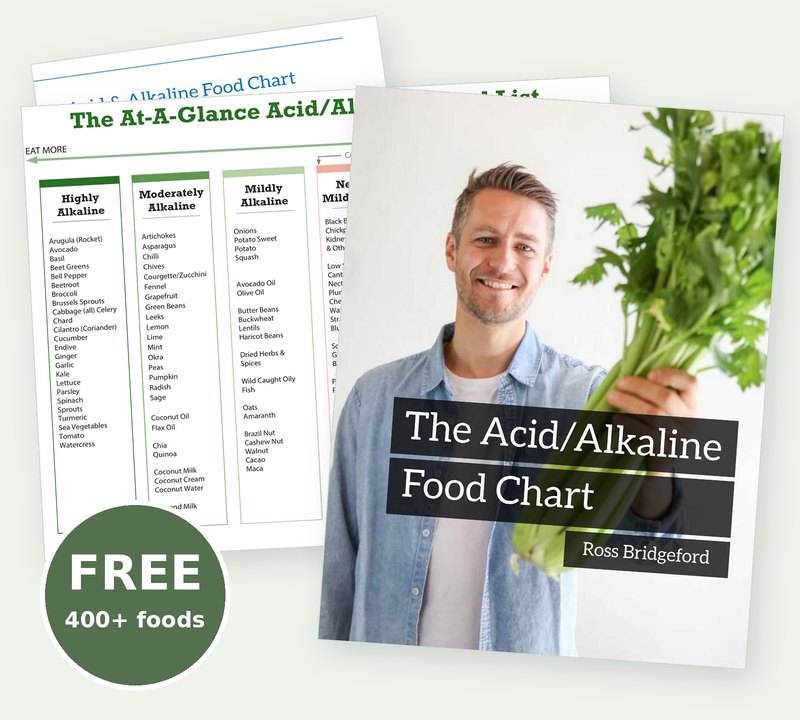
Want every food on one page? My free printable chart rates 400+ foods from Highly Alkaline to Highly Acidic, so it’s easy to load up on the mineral-rich ones. Get the free chart →
Magnesium: the one most of us run low on
Magnesium is a helper for more than 300 enzyme systems in your body, including the ones that make energy, run your muscles and nerves, control your blood sugar and build your bones. I’ve written a whole guide to magnesium deficiency (the signs, the research and how to fix it), so here’s the short version.
Is magnesium alkaline?
Yes. It’s one of the three minerals in the PRAL formula that pull a food towards alkaline, and the foods richest in it (seeds, nuts, beans and leafy greens) sit right at the heart of eating alkaline. Like potassium, it does its best work when it comes in food, with its natural partners.
How much magnesium do you need?
Women need 310 mg a day at 19 to 30 and 320 mg from 31, and men need 400 mg at 19 to 30 and 420 mg from 31. Those figures are the same in the US (NIH) and Australia (NHMRC). Yet 48% of Americans and 31% of Australians (ABS) don’t get enough from their food.
The best magnesium-rich alkaline foods
| Food, serving and rating | Magnesium |
|---|---|
| Hemp seeds 3 tbsp (30 g) Mildly Alkaline | 210 mg |
| Pumpkin seeds 28 g (about ¼ cup) Moderately Alkaline | 166 mg |
| Black beans, cooked 1 cup (172 g) Mildly Alkaline | 120 mg |
| Quinoa, cooked 1 cup (185 g) Moderately Alkaline | 118 mg |
| Edamame (young soybeans) 1 cup shelled (155 g) Mildly Alkaline | 99 mg |
| White (navy) beans, cooked 1 cup (182 g) Mildly Alkaline | 96 mg |
| Sunflower seeds 28 g (about ¼ cup) Mildly Alkaline | 91 mg |
| Cashews 28 g (a small handful) Mildly Alkaline | 82 mg |
| Swiss chard 100 g raw (about 3 cups) Highly Alkaline | 81 mg |
| Chia seeds 2 tbsp (24 g) Moderately Alkaline | 80 mg |
| Spinach 100 g raw (about 3 cups) Highly Alkaline | 79 mg |
| Artichoke 1 medium (128 g) Moderately Alkaline | 77 mg |
| Almonds 28 g (about 23) Moderately Alkaline | 76 mg |
Mineral figures calculated from USDA FoodData Central (SR Legacy) values per 100 g, raw unless it says cooked. Ratings are from my Acid/Alkaline Food Chart.
My favourite trick? Keep a jar of pumpkin seeds (or hemp seeds) on the bench and throw a handful on everything. For more on almonds, cashews and friends, see my alkaline nuts guide.
Calcium: not just for bones (or just from dairy)
About 98% of your calcium is stored in your bones (NIH), with the rest working hard in your muscles, nerves and heart, and helping your blood clot. And remember, your bones are also the store your body raids when it needs to buffer acid, which is why getting enough alkaline minerals and keeping your acid load down go hand in hand for strong bones.
How much calcium do you need?
| Who | US (NIH) | Australia (NHMRC) |
|---|---|---|
| Adults 19 to 50 | 1,000 mg | 1,000 mg |
| Women 51 to 70 | 1,200 mg | 1,300 mg |
| Men 51 to 70 | 1,000 mg | 1,000 mg |
| Everyone over 70 | 1,200 mg | 1,300 mg |
This is a big one for Australians. More than 60% of us didn’t meet our calcium needs in the latest national survey, including over three-quarters of women and about nine in ten women aged 50 and over (Australian Bureau of Statistics, 2026). In the US, about four in ten people aged 4 and over fall short (NIH).
Non-dairy calcium sources
| Food, serving and rating | Calcium |
|---|---|
| Almond milk, unsweetened 1 cup (240 ml), fortified Moderately Alkaline | 442 mg fortified: check the label |
| Sardines, canned, with bones 85 g (3 oz) Neutral / Mildly Acidic | 325 mg |
| Kale 100 g raw (about 1½ cups chopped) Highly Alkaline | 254 mg |
| Collard greens 100 g raw (about 3 cups) Highly Alkaline | 232 mg |
| Rocket (arugula) 100 g (a big bowl) Highly Alkaline | 160 mg |
| Chia seeds 2 tbsp (24 g) Moderately Alkaline | 151 mg |
| White (navy) beans, cooked 1 cup (182 g) Mildly Alkaline | 126 mg |
| Bok choy 100 g raw (about 1½ cups shredded) Highly Alkaline | 105 mg |
| Edamame (young soybeans) 1 cup shelled (155 g) Mildly Alkaline | 98 mg |
| Sesame seeds 1 tbsp (9 g) Mildly Alkaline | 88 mg |
| Okra 1 cup (100 g) Moderately Alkaline | 82 mg |
| Almonds 28 g (about 23) Moderately Alkaline | 75 mg |
| Tahini 1 tbsp (15 g) Mildly Alkaline | 64 mg |
Mineral figures calculated from USDA FoodData Central (SR Legacy) values per 100 g, raw unless it says cooked. Ratings are from my Acid/Alkaline Food Chart.
Calcium-set tofu is a superstar too, with anywhere from about 200 mg to 680 mg in 100 g depending on the brand (check the label for calcium sulfate or calcium chloride, and the calcium per serve). It rates Neutral / Mildly Acidic on my chart, so it fits nicely in your 20%.
Not all calcium is absorbed equally. Your body absorbs about 27% of the calcium in milk, and the calcium in kale, broccoli and cabbage is absorbed about as well, even though there’s less of it per serving. Spinach is the exception: only about 5% of its calcium gets absorbed, because its oxalate binds it (NIH). That doesn’t make spinach a bad food at all (it’s loaded with potassium and magnesium, and oxalate is a non-issue for practically everyone). It just means spinach isn’t your calcium source.
And what about dairy? You don’t have to be 100% anything, and some dairy is fine. If you do have it, kefir is my pick (a cup has around 316 mg of calcium), with milk and cheese kept occasional. But you can absolutely hit your calcium without relying on them. Calcium also needs vitamin D to be absorbed, so get some safe sunshine, and ask your GP to check your levels if you’re not sure.
Sodium: the alkaline mineral we get too much of
Sodium is essential. It’s the main mineral in the fluid outside your cells, and you need it for nerve signals and to keep your fluids in balance. But you need surprisingly little: Australia’s Adequate Intake is just 460 to 920 mg a day, with a target of no more than 2,000 mg (NHMRC).
The problem is that most of us eat far more. Americans average about 3,400 mg a day against a recommended limit of 2,300 mg (about one teaspoon of salt), and more than 70% of it comes from packaged and prepared foods, not the salt shaker (FDA).
Is salt alkaline?
Sodium counts as an alkaline mineral, but table salt is sodium chloride, and the chloride cancels the sodium out one for one. So salt doesn’t alkalise you, and too much of it works against everything else on this page. If you love a good unrefined salt for flavour, that’s fine. It’s still mostly sodium chloride, though, so how much you use matters far more than which one you choose.
Your sodium-to-potassium ratio
This is where it all comes together. What seems to matter most isn’t sodium or potassium alone, but the balance between them: remember those 10,709 adults, where the worst sodium-to-potassium balance came with a 62% higher risk of cardiovascular disease (see the research).
My rule of thumb is simple: eat more potassium than sodium, ideally a lot more. At the targets above (at least 3,510 mg of potassium, and under 2,000 to 2,300 mg of sodium), that’s around 1.5 to 1.75 times as much potassium as sodium. The easiest way to get there is to eat more of the foods in this guide and less packaged food, and it happens almost automatically.
Easy ways to bring sodium down:
- Cook from scratch most of the time. According to the CDC, around 40% of the sodium Americans eat comes from just a handful of foods: deli meat sandwiches, pizza, burritos and tacos, soups, savoury snacks, poultry dishes, pasta dishes, burgers and egg dishes (FDA).
- Flavour with herbs, spices, garlic, ginger and lemon instead of salt. Give it a few weeks and you’ll be amazed how little you miss the salt.
- Check labels on bread, sauces, stock and anything in a packet, and choose the lower-sodium option.
- Consider a potassium salt substitute (the kind used in that big trial), unless you have kidney disease or take the medicines in the box above.
What about baking soda?
Sodium bicarbonate (baking soda) is the one form of sodium that genuinely is alkaline, and doctors prescribe it for some people with kidney disease. But a single teaspoon carries around 1,260 mg of sodium, more than half a day’s limit (USDA), so it isn’t something I’d drink every day on your own. And remember that kidney trial: fruit and vegetables did a similar job, without the sodium.
What about iron, zinc and the trace minerals?
You’ll often see iron, zinc, manganese and copper on “alkaline minerals” lists too. They’re essential, but you need them in such tiny amounts (a few milligrams a day) that they barely register in your acid load. Where they DO matter is your energy, your immunity and how well you heal, and if you eat mostly plants, two of them deserve a little attention:
| Mineral | Daily need | Best plant sources | Tip |
|---|---|---|---|
| Iron | Men, and women over 50: 8 mg Women 19 to 50: 18 mg Vegetarians need about 1.8 times more | Lentils, beans, tofu, pumpkin seeds, cashews, leafy greens | Have it with vitamin C (lemon, capsicum, tomato) to absorb more |
| Zinc | Women: 8 mg Men: 11 mg (US), 14 mg (AU) | Pumpkin and hemp seeds, cashews, chickpeas, lentils, oats, tofu | Soaking beans, grains and seeds helps, because phytates reduce absorption |
Sources: NIH (iron), NIH (zinc), NHMRC (zinc). Australia’s iron targets are the same as the US.
If you’re often tired, or get mouth ulcers that keep coming back, it’s well worth asking your GP to check your iron and zinc (and B12). I cover that in why mouth ulcers keep coming back, and my alkaline protein guide is full of iron- and zinc-rich plant foods.
How to get more alkaline minerals every day
The good news is that you don’t need to count a single milligram. If you build your days around a few simple habits, the minerals take care of themselves:
My 7 simple habits
- Greens at every meal
- A cup of beans or lentils a day
- A handful of seeds or nuts
- Half an avocado
- Potatoes or sweet potatoes, skin on
- Herbs and lemon instead of salt
- Cook from scratch most of the time
A green smoothie at breakfast, a big salad at lunch and a side of greens at dinner covers habit one on its own. And you never have to be perfect: consistency is FAR better than perfection.
For the bigger picture, here’s my alkaline diet guide and easy plan, and my 15 most alkaline foods.
An easy mineral-rich day
Here’s how easily that adds up, with real food:
| When | What | Potassium | Magnesium | Calcium |
|---|---|---|---|---|
| Breakfast | Green smoothie: spinach, ½ avocado, 2 tbsp chia, fortified almond milk, cucumber, lemon | 1,482 mg | 218 mg | 726 mg |
| Snack | A small handful of almonds and two celery sticks | 413 mg | 84 mg | 107 mg |
| Lunch | Lentil soup with Swiss chard and tomato (1 cup lentils) | 1,401 mg | 166 mg | 101 mg |
| Dinner | Power bowl: sweet potato, black beans, kale, broccoli, tahini dressing, pumpkin seeds | 1,973 mg | 385 mg | 459 mg |
| Total | Targets: 2,600 to 3,800 mg potassium, 310 to 420 mg magnesium, 1,000 to 1,300 mg calcium | 5,269 mg | 853 mg | 1,394 mg |
Mineral figures calculated from USDA FoodData Central (SR Legacy) values per 100 g, raw unless it says cooked. Portions as in the food tables above.
That’s comfortably over every target, from four simple meals and a snack, and not a supplement in sight. (And don’t worry about that magnesium figure: the upper limit only applies to supplements, not to food, per the NIH.)
Here are four of my recipes that make it even easier:

Lunch
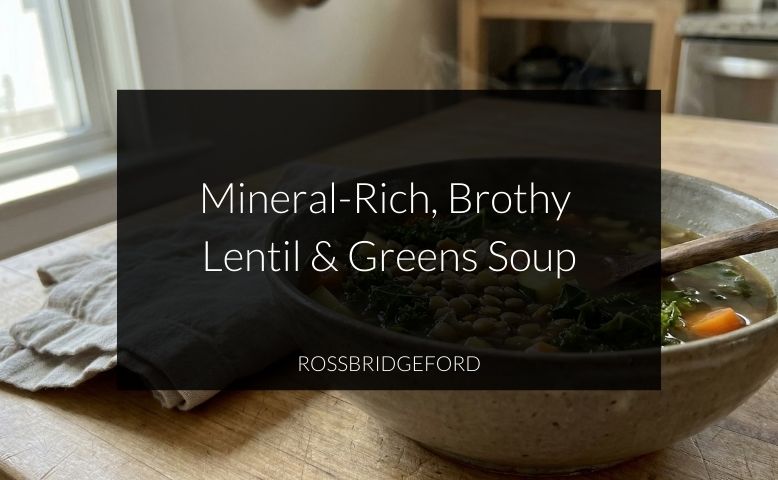
My Mineral Rich Lentil & Greens Soup: brothy, nourishing and packed with potassium and magnesium

Breakfast
My High-Potassium Juice & Smoothie: two easy ways to start the day mineral-rich
Lunch
My Magnesium-Boosting Super Salad: spinach, chard, quinoa, pumpkin seeds, almonds, black beans and avocado

Dinner
My Alkaline Power Bowl: greens, beans and healthy fats in one big, satisfying bowl
Are vegetables less nutritious than they used to be?
You may have heard that today’s vegetables have far fewer minerals than our grandparents’ did. There’s something to it. When researchers compared US food composition data for 43 garden crops from 1950 and 1999, they found median declines in six nutrients, including calcium, phosphorus and iron (from 6% for protein to 38% for riboflavin). They thought the most likely reason was that modern high-yielding varieties grow bigger, faster, which can spread the minerals a little thinner (Davis and colleagues, 2004).
But here’s the thing: vegetables, beans, nuts and seeds are still, by a long way, the richest sources of these minerals you can eat. The bigger problem isn’t that our vegetables have changed. It’s that most of us simply don’t eat enough of them. Fresh, seasonal and (where you can) locally grown is a lovely bonus, but eating MORE of them is what moves the needle.
Do you need an alkaline mineral supplement?
Honestly? Most people don’t, if they’re eating the way I’ve just described. The minerals in food come with the right partners, in the right balance, alongside fibre, antioxidants and everything else, and that’s very hard to put in a tub.
That said, there is real research behind the alkaline forms of these minerals: the bone trials above used potassium bicarbonate. So if you do choose a supplement, here’s what I’d look for:
- The alkaline forms. If acid balance is your reason, look for citrate or bicarbonate forms rather than chloride.
- Realistic expectations on potassium. Many supplement makers cap potassium at 99 mg a serve, around 2% of the Daily Value (NIH). Food wins by a mile: one baked potato gives you nine times that.
- Calcium from food first. The research on calcium supplements and heart health is mixed, with some studies finding a higher risk and others none (NIH), so I’d much rather you got yours from greens, tahini, tofu and the rest.
- Magnesium within the limit. The upper limit for supplements is 350 mg a day. My magnesium guide covers the different forms.
- A chat with your doctor first if you have kidney disease or heart failure, or take blood pressure medicines (ACE inhibitors or ARBs) or potassium-sparing diuretics.
What I’d skip
Drinking baking soda in water every day (it’s a lot of sodium), taking more potassium than the label says without your doctor’s OK, and using any supplement as a replacement for your greens. A supplement is the cherry on top, never the cake.
Free download
The full acid/alkaline chart, on one page
My free chart rates 400+ foods from Highly Alkaline to Highly Acidic, with a one-page version for your fridge. It makes loading up on the mineral-rich foods (greens, beans, seeds and nuts) so much easier.
Alkaline minerals FAQ
What are alkaline minerals?
The four main alkaline minerals are potassium, magnesium, calcium and sodium. They push a food (and your diet as a whole) towards the alkaline-forming side, and your body uses them to neutralise acids, as well as for your heartbeat, muscles, nerves and bones. The acid-forming minerals on the other side are phosphorus, sulfur and chloride.
Which minerals alkalise the body?
Potassium, magnesium and calcium do the most, especially when they come from fruit and vegetables, where they arrive with partners like citrate that your body turns into bicarbonate, its natural alkaline buffer. Potassium does the most work of all, simply because we eat so much more of it. Sodium is alkaline too, but most of it comes as salt (sodium chloride), where the chloride cancels it out.
Is magnesium alkaline?
Yes. Magnesium is one of the alkaline minerals, and in the PRAL formula it pulls a food towards alkaline. The richest sources, like pumpkin and hemp seeds, nuts, beans and leafy greens, are also some of the best alkaline foods. Most adults need 310 to 420 mg a day.
Is potassium alkaline?
Yes, and it’s the most important alkaline mineral in your diet. In fruit and vegetables it comes with partners like citrate, which your body turns into bicarbonate. Beans, lentils, potatoes, beet greens, spinach and avocado are among the best sources. Most adults need 2,600 to 3,800 mg a day, and the WHO suggests at least 3,510 mg.
Is calcium alkaline?
Yes. Calcium is an alkaline mineral, and it’s also the mineral your body draws from your bones when it needs to buffer acid. Kale, collards, bok choy, sesame and tahini, chia, calcium-set tofu and sardines are great sources. Most adults need 1,000 mg a day, and more after 50 (women) or 70 (everyone).
Is salt alkaline?
No. Sodium is an alkaline mineral, but table salt is sodium chloride, and the chloride cancels the sodium out, so salt doesn’t alkalise you. Most of us eat far too much of it, mostly from packaged and prepared foods. Aim for under 2,000 to 2,300 mg of sodium a day, and more potassium than sodium.
What foods are highest in alkaline minerals?
Leafy greens (beet greens, spinach, Swiss chard, kale), beans and lentils, potatoes and sweet potatoes, avocado, and seeds and nuts (pumpkin, hemp, chia, almonds). For calcium, add sesame, tahini, calcium-set tofu and sardines. A cup of cooked lentils gives you over 700 mg of potassium, and a small handful of pumpkin seeds around 166 mg of magnesium.
Are alkaline minerals the same as electrolytes?
They overlap. Electrolytes are minerals that carry an electric charge in your body fluids: sodium, potassium, calcium, magnesium, chloride, phosphate and bicarbonate (MedlinePlus). All four alkaline minerals are electrolytes, but so are acid-forming chloride and phosphate. The best electrolyte foods are the same mineral-rich foods in this guide, plus water and coconut water.
Does alkaline water contain alkaline minerals?
Some does. Depending on its source, water can carry a little calcium and magnesium, and some mineral waters carry a useful amount. But even then, a big plate of greens, beans and seeds gives you far more of these minerals than water ever will. My guide to making alkaline water at home compares every method.
Should I take an alkaline mineral supplement?
Most people don’t need one if they eat plenty of greens, vegetables, beans, nuts and seeds. If you do choose one, the alkaline forms (citrate or bicarbonate) are the ones with research behind them, and calcium is best from food. Check with your doctor first if you have kidney disease or heart failure, or take blood pressure medicines or potassium-sparing diuretics.
Can you get too many alkaline minerals?
From food, it’s very unlikely for healthy people, because your kidneys clear what you don’t need. The risk comes from supplements, or from potassium if you have kidney disease or take certain medicines (ACE inhibitors, ARBs, potassium-sparing diuretics). Sodium is the one most of us genuinely overdo.
How can I alkalise my body?
You don’t need to raise your blood pH: your body HAS to hold it at around 7.365, and it will. The goal is to give it plenty of alkaline minerals so it can do that without stress: eat greens at every meal, a cup of beans or lentils a day, a handful of seeds or nuts, and less processed food, sugar and salt. My alkaline diet guide walks you through it.

Ross has taught and coached realistic, sustainable alkaline eating since 2004, working with thousands of clients around the world. He’s the author of The Alkaline Reset Cleanse and The Alkaline Life (Hay House). Ross is a health educator, not a doctor or dietitian, so if you have a medical condition, talk to your own health professional before making big changes to your diet or taking supplements.
Sources
- NIH Office of Dietary Supplements: Potassium fact sheet for health professionals
- NIH Office of Dietary Supplements: Magnesium fact sheet for health professionals
- NIH Office of Dietary Supplements: Calcium fact sheet for health professionals
- NIH Office of Dietary Supplements: Iron fact sheet for health professionals
- NIH Office of Dietary Supplements: Zinc fact sheet for health professionals
- NHMRC: Nutrient Reference Values for Australia and New Zealand, Calcium
- NHMRC: Nutrient Reference Values, Magnesium
- NHMRC: Nutrient Reference Values, Sodium (sodium target revised 2017)
- NHMRC: Nutrient Reference Values, Zinc
- healthdirect: Potassium (Australian Adequate Intakes)
- Australian Bureau of Statistics (2026), Australians continue to need more calcium, Usual nutrient intakes, 2023
- US Food and Drug Administration: Sodium in your diet
- World Health Organization: Increasing potassium intake to reduce blood pressure and risk of cardiovascular diseases in adults
- MedlinePlus: Fluid and electrolyte balance
- Remer T, Manz F (1995). Potential renal acid load of foods and its influence on urine pH. J Am Diet Assoc
- Pizzorno J, Frassetto LA, Katzinger J (2010). Diet-induced acidosis: is it real and clinically relevant? Br J Nutr
- Aburto NJ and colleagues (2013). Effect of increased potassium intake on cardiovascular risk factors and disease: systematic review and meta-analyses. BMJ
- Ma Y and colleagues (2022). 24-hour urinary sodium and potassium excretion and cardiovascular risk. N Engl J Med
- Neal B and colleagues (2021). Effect of salt substitution on cardiovascular events and death. N Engl J Med
- Dawson-Hughes B and colleagues (2009). Treatment with potassium bicarbonate lowers calcium excretion and bone resorption in older men and women. J Clin Endocrinol Metab
- Dawson-Hughes B and colleagues (2015). Potassium bicarbonate supplementation lowers bone turnover and calcium excretion in older men and women: a randomized dose-finding trial. J Bone Miner Res
- Goraya N and colleagues (2013). A comparison of treating metabolic acidosis in CKD stage 4 hypertensive kidney disease with fruits and vegetables or sodium bicarbonate. Clin J Am Soc Nephrol
- Davis DR, Epp MD, Riordan HD (2004). Changes in USDA food composition data for 43 garden crops, 1950 to 1999. J Am Coll Nutr
- USDA FoodData Central (SR Legacy, April 2018): nutrient values for the food tables

Hi Ross, I just came across your blog post on alkalizing minerals. I know it’s an older post, but if you haven’t read about oxalates, you really need to. The book “Toxic Superfoods” is a great resource. In you blog post you recommend spinach & chard a number of times, these are some of the absolute highest foods in oxalates and eating them over time can give people oxalate toxicity issues. In the Q & A section someone asks about gout, and you say, “Generally speaking, all alkaline forming foods will help neutralise and eliminate stored uric acid.” One form of gout is actually caused by oxalates in the diet, so eating spinach & chard can easily worsen gout. Just an FYI.
Hi Jay
https://liveenergized.com/alkaline-foods-2/truth-about-oxalate/
https://liveenergized.com/alkaline-foods-2/truth-about-anti-nutrients/
Ross
Hello
I was wondering if there is a mineral supplement that I can take that covers all of the minerals discussed in your article? I am not a big fan of brussels sprouts or any of the cruciferous vegetables as they cause bloating. Dont care for swiss chard or collard greens either. I know I’m missing vital minerals , and I believe my body is highly acidic. I dont consume sodas, fried foods or dairy, and I drink 1 cup coffee a day. Alcohol consists of occasional tequila, gin or vodka, as I cant handle red wine (tannins), or white wine (sulfites). I dont consume sugar, stevia in my morning coffee. dont eat any dairy products or milk, occasional chicken, fish thanks for your advice
What are some foods to avoid while trying to restore PH balance?
I am a victim of frequent gout attack. What specific body alkalizing foods should I go for to keep uric acid and gout at bay?
I have enjoyed and learnt a lot from your article. My best regards.
Eugene
Thanks Eugene
These minerals will help with your gout 🙂
Ross
Thank you for the bone building smoothie. I have been told that my bones are shrinking or I am developing osteoporosis. I have found this smoothie and hopefully it may help me to strengthen my bones and improve my health..
Thank you
Thanks really very informative. Blessings from a saint.
Hi! I just would like to offer you a huge thumbs up for the
excellent info you have here on this post. I will be coming back to
your site for more soon.
I have been drinking distilled water to avoid fluoride and I am aware that it might be necessary to ensure I am taking in a lot of good minerals, just in case, as the rumors suggest, distilled water draws minerals from the body. I have been put on a food regime by a nutritional counsellor and Chinese medicine practitioner. Now I understand why I must eat certain foods. Having been a raw foodie for two years from 2006 – 2008, I found it too much. Now I am balancing raw food with some cooked including oily organic fish, tempeh, quinoa, black rice, brown rice, millet and a variety of veggies and herbs – mostly leafy greens. BRILLIANT article, well structured and with all the pertinent information. Thank you
hi Ross, absolutly briiliant information, and very easy to follow,with no jargon, thank you, I love the recipes, I have gallbladder problems and can’t eat alot of foods, especially protein based, eggs, cheese and meat just give me crippling gallbladder attacks, also no oils and fats. I am buying your Alkaline recipes book and hopefully will have some great ideas to try out. I have been researching for eight years and have finally come across the best method to eliminate my medical problems, your alkaline recipes. I can’t thank you enough 🙂
Thank you for all this wonderful information, so concisely put – now I can get on with alkalising my life !
That tweet /twitter bar is permanently at the side of the article again
and obscures the text.!!!!!!!!!!!!!!!! Never experienced this before apart from last week – if present it usually lies horizontally at the top of the article I have found .
Thank You.Very usefull
hic yard?mc? olmad?
This article is very useful for normal people as well as for pregnants. Good article, i like it. Thanks
Very nice article abput iron…very informative and beneficial..thx
nice article abput potassium…very informative and beneficial for me..thx
Hi Szilvia,
Goat’s milk is a healthier alternative to cow’s milk, as it is mildly alkaline. In contrast to cow’s milk it contains caprylic acid, which is antifungal. You should however use unprocessed goat’s milk from organically grown and grazing goats.
Wow, very usefull article! Lots of great info here!
There is one thing completely new to me: Is goats milk really OK??? I’m gonna have to give it a try now! 🙂
hi
the lst time i purchased green powder it had no given period or use by date on so i returned it
An fatastic informative blog. But more info at my blog.
Henk Niermans