


Alkaline Seasonings: The One Quick Tip That Made Alkalising Easy
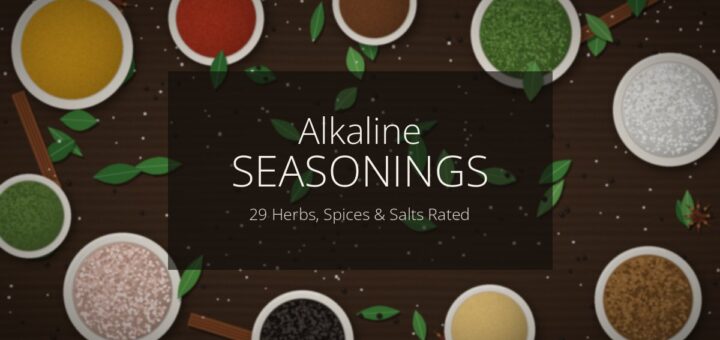
Which seasonings are alkaline? The short answer
The most alkaline seasonings are turmeric, ginger, garlic, fresh parsley, coriander and basil, and seaweed. Next come mint, dill, oregano, thyme, black pepper, cayenne, lemon and lime juice, and natural sea or Himalayan salt (in small amounts). Cinnamon, cumin, olive oil and tahini are mildly alkaline.
The ones to swap out are soy sauce, refined table salt, MSG and stock cubes, ketchup, mayonnaise, shop-bought dressings and vinegar, which are all acidic.
This is just a quick one (I think – we’ll see when I stop writing!) about a little tweak you can make that will have a huge impact on your enjoyment of alkalising.
When you are first starting with alkalising it can be difficult. You may find recipes hard to come by, you might struggle to know what to eat and end up eating the same things over and over again through fear of going wrong, you might feel like you’re missing out on certain flavours or you might just get damn bored.
This blog post will help: (shh don’t tell anyone but) it’s all about seasonings and dressings.
When I realised how much I could do with seasonings and dressings every meal changed and became a million times more fun and enjoyable.
My 5 Favourite Alkaline Seasonings
Here are my top five seasonings tips:
- Herbamare: weird name, tasty product. Herbamare is made with 100% organic herbs and natural sea salt. It literally makes EVERYTHING tasty. You can just sprinkle onto veg, salads, into wraps, on literally any dinner and make it ten times more enjoyable.
- Bragg: this is liquid flavour. Literally. Great on salads, veggies, dressings, soups, rice, beans, wok foods, tofu, fish, popcorn, casseroles and more. It is a brilliant substitute for soy sauce (most soy sauces are brewed with wheat, so they contain gluten, many have added preservatives – and as they are fermented they are really acidic) and fantastically is a sauce of all of the essential liquid aminos (sauce/source – geddit?)
- Olive Oil & Lemon: so, so simple. Make up a batch of this and use it on anything and everything. It is just divine on freshly steamed vegetables and is clearly a winner for salads. Add minced ginger for a bit of a kick. (When you want something creamier, try my Tahini and Lemon Dressing or my Detox Salad Dressing.)
- Healthy Salt: when you first start alkalising you think you have to cut out all salt. But then you realise (maybe when you read this) that natural salt, especially Himalayan salt and Celtic Sea Salt, are fine to use and are actually good for you! Bring on the flavour.
- Spices: nutmeg, cinnamon and ginger make everything fun! These are brilliant for muesli and whenever you treat yourself to warm oats. Ginger in its fresh form is also amazing for adding to stir-fries and steam-fries, sauces, dressings and cooking with green crunchy veggies like bok choi and broccoli.
Seriously, start bringing the flavour back! Who needs boring food!
The product links above are iHerb affiliate links. If you buy through them I earn a small commission, at no extra cost to you.
Now, since I first shared this tip I’ve had SO many questions about which herbs, spices, salts and sauces are actually alkaline. So I’ve added my full ratings below, the acidic ones I’d swap out, my favourite homemade blends, and what the research says.
Which Seasonings Are Alkaline? 29 Herbs, Spices & Flavours Rated
Herbs and spices are some of the most alkaline foods there are. Gram for gram, ground turmeric, cumin and ground ginger have the three strongest alkaline-forming scores (PRAL) of all 195 foods in my alkaline foods list.
Now, you use them by the pinch, not by the plateful. So their real power is what they do to everything else on your plate: they make greens and veggies taste incredible, and they replace the salty, sugary, acidic sauces that undo all your good work.
Here’s how the seasonings I get asked about most are rated, from most alkaline down:
| Seasoning and rating | How I use it |
|---|---|
| Turmeric (ground) Highly Alkaline | Curries, soups, roast veg and golden paste, always with black pepper and a little healthy fat |
| Ginger (fresh or ground) Highly Alkaline | Grated into stir-fries, dressings, teas and smoothies |
| Garlic Highly Alkaline | The base of almost every savoury meal I make |
| Parsley Highly Alkaline | By the handful, not the sprinkle: salads, tabbouleh, green juices |
| Coriander (cilantro) Highly Alkaline | Curries, salsas and Asian-style salads |
| Basil Highly Alkaline | Pesto, anything with tomatoes, zucchini noodles |
| Seaweed (nori, dulse) Highly Alkaline | Crumbled over bowls and salads for a salty, savoury hit |
| Mint Moderately Alkaline | Salads, dressings, fresh in water with lime |
| Dill Moderately Alkaline | Potato salads, cucumber, salmon |
| Oregano Moderately Alkaline | Tomato sauces, roast veg, Greek-style salads |
| Thyme Moderately Alkaline | Soups, stews and roast root veg |
| Tarragon Moderately Alkaline | Creamy dressings and anything with mushrooms or chicken |
| Black pepper Moderately Alkaline | Everywhere, and always with turmeric |
| Cayenne pepper Moderately Alkaline | A pinch for heat in soups, dressings and lemon water |
| Lemon and lime juice Moderately Alkaline | My go-to ‘sour’ in dressings, and the swap for vinegar |
| Sea salt (natural) Moderately Alkaline | A pinch, at the table, after tasting |
| Himalayan salt Moderately Alkaline | Same as sea salt: a pinch, not a pour |
| Coconut oil Moderately Alkaline | Curries and gentle cooking |
| Flaxseed oil Moderately Alkaline | Cold only: dressings and drizzled over food, never heated |
| Onion Mildly Alkaline | Softened in a little oil as the base for soups, curries and sauces |
| Cinnamon Mildly Alkaline | Oats, muesli, smoothies, chai; choose Ceylon if you use lots |
| Cumin Mildly Alkaline | Curries, dhal, Mexican-style dishes |
| Bay leaf Mildly Alkaline | Into soups, stews and rice, then fished out |
| Olive oil Mildly Alkaline | My everyday dressing oil |
| Avocado oil Mildly Alkaline | Higher-heat cooking |
| Sesame oil Mildly Alkaline | A few drops to finish stir-fries and Asian dressings |
| Tahini Mildly Alkaline | Creamy dressings and sauces |
| Mustard Neutral / Mildly Acidic | A teaspoon in a dressing is fine |
| Sauerkraut and kimchi Neutral / Mildly Acidic | A forkful on the side |
Herbamare and Bragg aren’t on my chart as products. Herbamare is sea salt with organic herbs and vegetables, all on the alkaline side. Bragg is an unfermented soy seasoning, a far better pick than soy sauce; just go easy, because it’s salty.
Want every food on one page? My free printable chart rates 400+ foods from Highly Alkaline to Highly Acidic, herbs and spices included. Get the free chart →
The Acidic Seasonings I’d Swap Out (and What to Use Instead)
This is where SO many people trip up. They make a beautiful big plate of greens and veggies… and then drown it in a shop-bought dressing, soy sauce or ketchup.
You don’t have to be perfect, and a little of these in your 20% is fine. But when you’re cooking every day, these are the easy swaps that make the biggest difference:
| Instead of | Try this |
|---|---|
| Soy sauce Moderately Acidic | Bragg Liquid Aminos, or lime juice with garlic and ginger Moderately Alkaline |
| Refined table salt Highly Acidic | Natural sea or Himalayan salt, and less of it Moderately Alkaline |
| Shop-bought salad dressing Moderately Acidic | Olive oil and lemon (recipe below) Mildly Alkaline |
| Mayonnaise Highly Acidic | Tahini and lemon, or mashed avocado Mildly Alkaline |
| Ketchup Highly Acidic | Natural tomato paste with garlic, oregano and a pinch of salt Moderately Alkaline |
| Balsamic vinegar Highly Acidic | Lemon or lime juice Moderately Alkaline |
| Apple cider vinegar Moderately Acidic | Lemon or lime juice Moderately Alkaline |
| Maple syrup Highly Acidic | Cinnamon and vanilla for warmth and sweetness Mildly Alkaline |
| Honey Moderately Acidic | Cinnamon, vanilla or a few berries Mildly Alkaline |
| Canola oil Highly Acidic | Olive, avocado or coconut oil Mildly Alkaline |
| MSG Highly Acidic | Garlic, fresh herbs and a sprinkle of herb salt Highly Alkaline |
Two more to watch: stock cubes and packet seasoning mixes (taco, gravy, ‘chicken’ salt) are often bulked out with salt, sugar, wheat and MSG, so make your own (my 3-ingredient taco seasoning takes two minutes). And nutritional yeast and yeast spreads like Vegemite and Marmite contain yeast, which puts them on the acidic side too.
How to Season the Alkaline Way: My Everyday Habits
- Start with garlic, ginger and onion. Nearly every savoury meal I cook starts here. Garlic and ginger are Highly Alkaline and onion is Mildly Alkaline.
- Fat + sour + salt + herbs. Almost every great dressing or sauce is a healthy fat (olive oil, tahini, avocado), something sour (lemon or lime), a pinch of salt and fresh herbs. Get that balance right and you’ll never miss the bottled stuff.
- Dried herbs early, fresh herbs last. Dried herbs go in while you cook. Fresh, leafy herbs go in at the very end (or raw) so they keep their colour and flavour. As a rough guide, 1 teaspoon of dried equals about 1 tablespoon of fresh.
- Wake your spices up. Warm ground spices in a little oil for 30 to 60 seconds before you add everything else. It makes a HUGE difference to the flavour.
- Turmeric always comes with black pepper and a little fat. On its own, your body absorbs very little of turmeric’s curcumin. The piperine in black pepper helps it along.
- Salt last, at the table. Taste first, then add a pinch. You’ll be surprised how often the herbs, garlic and lemon mean you don’t need it.
- Make the dressing on Sunday. A jar of olive oil and lemon in the fridge means a salad is always 30 seconds away.
3 Easy Homemade Alkaline Seasoning Blends
1. My everyday olive oil and lemon dressing
- 3 tbsp extra virgin olive oil
- 1 tbsp fresh lemon juice (about half a lemon)
- 1 tsp finely grated fresh ginger (optional, for a kick)
- A pinch of sea salt and black pepper
Shake it all together in a jar. Double or triple it and it keeps in the fridge for 3 to 4 days (give it a shake, as the oil can thicken when cold). Swap the lemon for lime, or add a teaspoon of tahini to make it creamy.
2. Green herb salt
- 3 tbsp sea salt flakes
- 3 tbsp dried parsley
- 1 tbsp dried basil
- 1 tbsp dried thyme
- 1 tsp garlic powder
- 1 tsp dried seaweed flakes (dulse or nori), optional
Pulse a few times in a spice grinder or small blender, then store it in a jar. Because it’s bulked out with herbs, a sprinkle gives you more flavour for less salt. It’s my homemade take on Herbamare.
3. Golden spice mix
- 2 tbsp ground turmeric
- 1 tbsp ground cumin
- 1 tbsp ground ginger
- 1 tbsp ground coriander
- 2 tsp ground black pepper
- 1 tsp ground cinnamon (Ceylon)
Mix and store in a jar. Warm 1 to 2 teaspoons in a little coconut or olive oil, then use it in curries, soups, dhal, roast cauliflower or scrambled tofu. For a ready-to-go version, make my Turmeric Golden Paste.
A Quick (Honest) Word on Salt
I stand by what I wrote above: you don’t have to cut out all salt when you go alkaline, and natural salt is a world away from refined table salt. Refined table salt is Highly Acidic, while natural sea salt and Himalayan salt are Moderately Alkaline.
But salt is still salt, so here’s how I keep it in check:
- A pinch, not a pour. The World Health Organization recommends adults have less than 5 g of salt a day, which is about a teaspoon, and that includes the salt already in your food. Much of it hides in processed foods like bread, processed meats and snacks, and in condiments like soy and fish sauce.
- Herb salts and Bragg count too. Bragg has 310 mg of sodium per teaspoon, so it’s a splash for flavour, not a pour.
- Think about iodine. Sea salt, Himalayan salt and other specialty salts usually aren’t iodised. If natural salt is the only salt you use, make sure you’re getting iodine from other foods (a sheet of nori here and there, fish or eggs if you eat them), and talk to your doctor if you’re pregnant or breastfeeding, when you need more.
- Let the herbs do the work. The more flavour you get from garlic, ginger, lemon and herbs, the less salt you’ll reach for (there’s a study on exactly this below).
What the Research Says About Herbs & Spices
I always say my coaching is founded on the principles already proven in the literature, and seasonings are a lovely example. Herbs and spices fit right into my Triple-A approach (alkaline, antioxidant-rich and anti-inflammatory).
They’re among the most antioxidant-rich foods ever tested. An international team led from the University of Oslo measured the antioxidant content of more than 3,100 foods, drinks, herbs and spices. Spices and herbs averaged 29.02 mmol per 100 g, compared with 0.80 for vegetables and 1.25 for fruit (Carlsen et al., 2010). That’s per 100 g and you use them by the pinch, so think of them as a daily top-up alongside your greens, not a replacement for them.
They help you eat less salt. In the SPICE trial, 40 adults spent 20 weeks either reducing salt on their own or learning to cook with herbs and spices instead. By the end, the herbs-and-spices group was eating about 957 mg less sodium a day than the go-it-alone group, which is roughly 2.4 g of salt (Anderson et al., 2015). In the spirit of full transparency: the trial was funded by the McCormick Science Institute, the research arm of a spice company.
Cinnamon may help blood sugar. A review of 10 trials in 543 people with type 2 diabetes found cinnamon lowered fasting blood glucose by about 24.6 mg/dL, though it didn’t change HbA1c and the trials varied a lot (Allen et al., 2013). If you’re using cinnamon every day, choose Ceylon: Germany’s Federal Institute for Risk Assessment says a 60 kg adult reaches the safe daily limit for coumarin with about 2 g of cassia cinnamon a day (a little under a teaspoon).
Turmeric needs a partner. Curcumin, the most studied compound in turmeric, is poorly absorbed on its own. Black pepper’s piperine is one of the main ways to improve that (Anand et al., 2007), which is why turmeric and black pepper always go in together in my kitchen.
Recipes to Get You Started
- Tahini and Lemon Dressing
- Creamy Turmeric Salad Dressing
- Coriander, Mint and Chilli Dressing
- Avocado Ranch Dressing
- Turmeric Golden Paste
- 3-Ingredient Taco Seasoning
- Turmeric and Ginger Tea and Latte
- My Top 7 Alkaline Herbal Teas
And for the bigger picture, here’s my alkaline diet guide and my list of the 15 most alkaline foods (turmeric, ginger and garlic all feature).
Alkaline Seasonings FAQ
Which seasonings are alkaline?
The most alkaline seasonings are turmeric, ginger, garlic, fresh parsley, coriander and basil, and seaweed like nori, which are all Highly Alkaline. Mint, dill, oregano, thyme, tarragon, black pepper, cayenne, lemon and lime juice, and natural sea or Himalayan salt are Moderately Alkaline. Cinnamon, cumin, olive oil and tahini are Mildly Alkaline. There are 29 rated in the table above.
What seasonings are not acidic?
For an alkaline diet, stick with fresh and dried herbs, turmeric, ginger, garlic, black pepper, lemon or lime juice, cold-pressed oils and a little natural salt. The acidic ones are soy sauce, refined table salt, MSG and stock cubes, ketchup, mayonnaise, shop-bought dressings, vinegar, honey and maple syrup. If you’re asking because of reflux, that’s a slightly different kind of ‘acidic’, and some people find chilli, garlic or citrus triggers their symptoms, so notice your own. My 14-day reflux plan goes through it.
What herbs are the most alkaline?
Parsley, coriander (cilantro) and basil are Highly Alkaline, along with turmeric and ginger. Mint, dill, oregano, thyme and tarragon are Moderately Alkaline. Use the leafy herbs generously: a whole handful of parsley in a salad does far more than a sprinkle on top.
Is salt acidic or alkaline?
It depends on the salt. Refined table salt is Highly Acidic, while natural sea salt and Himalayan salt are Moderately Alkaline. Salt is still salt though, so keep it to a pinch. The World Health Organization recommends less than 5 g of salt a day (about a teaspoon), including the salt already in your food.
Is Himalayan salt alkaline?
Yes, Himalayan salt is Moderately Alkaline, the same as natural sea salt and Celtic sea salt. Just remember most natural salts aren’t iodised, so make sure you’re getting iodine from other foods too.
Is soy sauce acidic?
Yes, soy sauce (including tamari) is Moderately Acidic. It’s fermented and very salty. Bragg Liquid Aminos is my swap: it isn’t fermented, though it’s still salty, so a splash is plenty. Lime juice with garlic and ginger also gives you that savoury hit.
Is Bragg Liquid Aminos alkaline?
Bragg isn’t on my chart as a product, but it’s a far better choice than soy sauce: it’s made from soybeans and water and isn’t fermented. It is salty (310 mg of sodium per teaspoon), so use it as a splash for flavour, not a pour.
Is apple cider vinegar alkaline?
No. Apple cider vinegar is Moderately Acidic and balsamic vinegar is Highly Acidic, because fermentation makes foods acidic. Lemon or lime juice gives you the same tang in dressings and is Moderately Alkaline. There’s more on this in my acidic foods guide.
Is cinnamon alkaline?
Yes, cinnamon is Mildly Alkaline, and it’s the easiest way to add sweetness and warmth without sugar. If you use a lot every day, choose Ceylon cinnamon: cassia cinnamon (the most common kind) is high in coumarin, and Germany’s food safety institute advises eating it in moderation.
Is black pepper alkaline?
Yes, black pepper is Moderately Alkaline. It’s also the perfect partner for turmeric, because the piperine in pepper helps your body absorb turmeric’s curcumin.
Free download
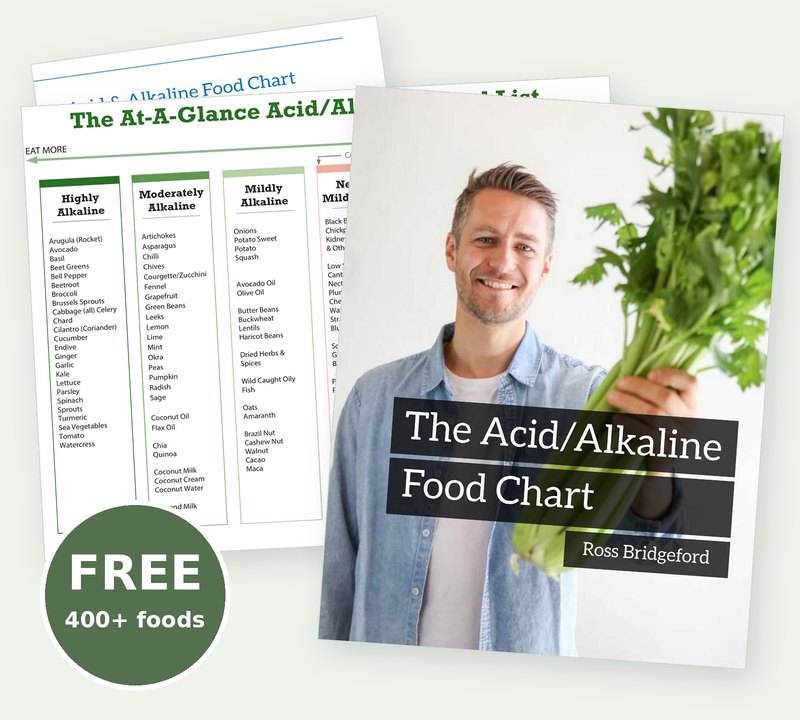
See where every food sits
My free alkaline food chart rates 400+ foods from Highly Alkaline to Highly Acidic, with a one-page version for your fridge. Check any food in seconds while you shop or cook.
It’s free. Just tell me where to send it.

Ross has taught and coached realistic, sustainable alkaline eating since 2004, working with thousands of clients around the world. He’s the author of The Alkaline Reset Cleanse and The Alkaline Life (Hay House). Ross is a health educator, not a doctor or dietitian, so if you have a medical condition, talk to your own health professional before making big changes to your diet.
Sources
- Ratings: my Acid/Alkaline Food Chart and Alkaline Foods List
- Carlsen et al. (2010), The total antioxidant content of more than 3100 foods, beverages, spices, herbs and supplements used worldwide, Nutrition Journal
- Anderson et al. (2015), Effects of a behavioral intervention that emphasizes spices and herbs on adherence to recommended sodium intake: the SPICE randomized clinical trial, American Journal of Clinical Nutrition (funded by the McCormick Science Institute)
- Allen et al. (2013), Cinnamon use in type 2 diabetes: an updated systematic review and meta-analysis, Annals of Family Medicine
- Anand et al. (2007), Bioavailability of curcumin: problems and promises, Molecular Pharmaceutics
- German Federal Institute for Risk Assessment (BfR), FAQ on coumarin in cinnamon and other foods
- World Health Organization, Sodium reduction fact sheet
- NIH Office of Dietary Supplements, Iodine fact sheet for consumers

Have you tried Korean bamboo salt? I did a pH on it and it turned out great! scores over 10+
You can dissolve it in water to drink. It tastes like sulphur though, so not many may like it. Mixes well into dishes too!
May choice of remedy when feeling feverish.